
Get Your Quote for Gas Pool Heater Technician
Fill the form below to inquire about Gas Services Edmonton's Gas Pool Heater Technician in Edmonton.
Fill the form below to inquire about Gas Services Edmonton's Gas Pool Heater Technician in Edmonton.
Anyone can carry a wrench, but gas equipment demands a specific kind of training most general handymen never receive. A qualified Gas Pool Heater Technician Edmonton combines gas licensing with pool-specific mechanical knowledge, and knowing the difference protects both your equipment and your household.
Most homeowners rarely think about what actually separates a technician qualified to work on gas pool equipment from someone who simply seems handy, especially across Edmonton. The distinction matters more than most people realize, since a mistake on the gas side of a pool heater carries consequences a general handyman is not trained to recognize, let alone prevent.
This matters more for homes across Edmonton than many homeowners assume, since gas equipment failures are not always obvious to spot from the outside. Gas Services Edmonton trains every technician to catch exactly this kind of developing problem before it becomes dangerous, since a connection that looks tight and a burner that appears to be running normally can both mask an issue that only proper training catches.
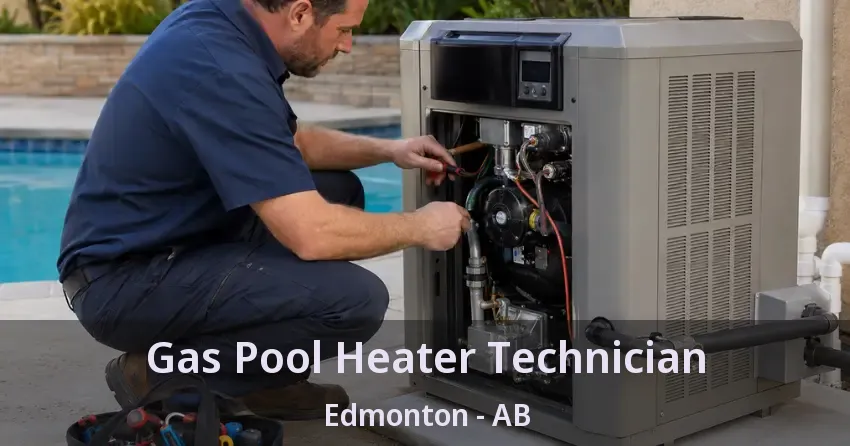
A licensed Gas Pool Heater Technician Edmonton has completed formal gas fitting training and holds credentials specific to working with pressurized fuel systems, combustion equipment, and venting requirements. A general handyman, however skilled at other home repairs, typically has none of this specialized training and is not legally permitted to perform gas-side work in most jurisdictions.
The practical difference shows up the moment something goes beyond a simple part swap. A licensed technician recognizes combustion problems, pressure irregularities, and venting issues that look like nothing to an untrained eye but represent a genuine hazard. A handyman working past their qualification often cannot tell the difference between a cosmetic issue and a safety one, which is exactly the scenario licensing exists to prevent.
This distinction is not a matter of experience alone. A handyman with decades of general home repair experience across Edmonton still lacks the specific training gas equipment requires, since gas fitting is a distinct trade with its own certification path rather than a skill that develops naturally from broader repair work. Years of unrelated experience does not substitute for the specific credential this work requires.
A qualified technician holds formal gas fitting certification through a recognized licensing authority, along with combustion and venting training specific to pressurized fuel-burning equipment. Ask any provider to confirm their licensing status before booking, since this work is not legally permitted without it in most jurisdictions.
No, not on the gas-side components. A general handyman typically lacks the specific gas fitting certification required to legally and safely work on pressurized fuel systems, burners, or venting. Tasks like clearing debris or checking for visible damage are fine for a homeowner, but gas valve and burner work requires a licensed technician.
Typical costs for a technician visit range from $150 to $750 depending on the diagnosis and whether parts need to be ordered for the specific heater model. A straightforward sensor or igniter fix sits toward the lower end, while a heat exchanger replacement sits considerably higher.
Ask directly whether they are licensed to perform gas fitting work in your province or region, and request to see the credential if needed. A qualified technician answers this question immediately and without hesitation, since licensing is a matter of public record.
Yes. A technician can be fully licensed for general gas fitting work while still lacking the specific manufacturer authorization a warranty claim requires. Confirming both credentials separately before booking protects the warranty coverage on a heater still within its manufacturer term.
Beyond the direct safety risk, home insurance claims tied to a gas equipment incident can be denied if the work was performed by someone without proper licensing. Unqualified work also frequently needs to be redone by a licensed technician, meaning the homeowner effectively pays twice.
A standard diagnostic and repair visit takes 1 to 2 hours when the failed component is confirmed quickly and the part is already on the truck. More complex diagnostics or special-ordered parts can extend the timeline, and a qualified technician explains the expected duration before starting work.
Formal gas technician training across Edmonton covers combustion theory, pressure testing, venting code requirements, and the specific failure modes of gas-fired equipment, none of which overlaps meaningfully with general handyman skills or broader home maintenance knowledge. This training typically culminates in a licensing exam through the relevant provincial or regional gas safety authority, which technicians must pass and maintain through ongoing certification and periodic renewal requirements throughout their career.
Any provider claiming to service gas pool heaters should be able to produce evidence of this training without hesitation. A hesitant or vague answer to a direct licensing question is itself a meaningful red flag worth taking seriously.
Manufacturer-specific training deserves particular attention for homeowners across Edmonton, since a technician trained on one heater brand's control system does not automatically transfer that knowledge perfectly to a different brand's proprietary components. A technician who has genuinely trained on the specific model in question diagnoses faster and more accurately than one working from general gas equipment knowledge alone.
Some pool heater maintenance tasks are genuinely safe for a homeowner to handle independently, while gas-side work is not one of them under any circumstances. Clearing debris from around the cabinet, checking for obvious visible damage, and monitoring water flow are reasonable homeowner tasks that require no special training. Anything involving the gas valve, burner assembly, or venting system belongs exclusively to a licensed technician.
The risk calculation is not close for homes across Edmonton. A homeowner who successfully swaps a simple part might save a modest service fee, but a mistake on a gas connection can produce a carbon monoxide hazard that goes undetected for weeks. That risk is simply not worth the savings compared to booking a qualified technician from the outset.
Homeowners across Edmonton sometimes assume a task is safe simply because a component looks accessible or a video tutorial makes it appear straightforward. Accessibility has nothing to do with whether gas-side work is safe to perform without training, and a component that looks simple to remove can still be part of a pressurized system that requires proper testing after any disturbance.
A proper service visit from a Gas Pool Heater Technician Edmonton follows a structured diagnostic sequence rather than jumping straight to part replacement. The technician typically starts with a visual inspection, moves to a start-up cycle observation, and only then isolates the specific component responsible for any symptom the homeowner reported, documenting each step along the way.
This structured approach benefits homeowners across Edmonton in ways that are not always obvious upfront. A heater that will not ignite could be an igniter, a gas supply issue, or a flame sensor problem, and only a trained technician can reliably distinguish between them without unnecessary part replacement, which saves both time and money on the visit overall.
Homeowners in Edmonton who have watched an unqualified repair attempt firsthand often describe the same pattern: parts get swapped one at a time in the hope that something eventually fixes the symptom, with no real diagnostic process behind the sequence. A trained technician avoids that trial-and-error approach entirely by testing the actual components before recommending any replacement.
A few direct questions separate a genuinely qualified technician from someone hoping the job goes smoothly. Asking these questions upfront costs nothing and can prevent a serious problem down the line for homeowners across Edmonton, well before any tools come out of the truck.
A qualified technician answers each of these directly and without defensiveness. Vague or evasive responses to any of these questions warrant looking elsewhere for the work.
It can feel awkward for homeowners across Edmonton to ask a service provider these kinds of direct questions, but a genuinely qualified technician expects them and welcomes the opportunity to demonstrate their credentials. Any provider who reacts poorly to a reasonable licensing question is telling a homeowner something important about how the rest of the job is likely to go.
Some repairs across Edmonton, particularly those involving warranty coverage, require the technician to hold specific manufacturer authorization beyond general gas licensing. A technician performing warranty work without proper authorization can void the manufacturer's coverage entirely, leaving the homeowner responsible for costs that should have been covered under the original purchase agreement and warranty terms.
Homeowners across Edmonton with a heater still under manufacturer warranty should specifically ask whether a prospective technician holds authorization for that brand before booking any repair work. Gas Services Edmonton maintains authorization across the pool heater brands most commonly installed throughout the region, which keeps warranty coverage intact for homeowners who need it.
This distinction catches many homeowners off guard, since a technician can be fully licensed for general gas fitting work while still lacking the specific manufacturer authorization a warranty claim requires. Confirming both credentials separately, rather than assuming one implies the other, protects homeowners from an unpleasant surprise if a warranty claim is later denied.
An unqualified technician working on gas equipment introduces risk that extends well beyond a botched repair. Improperly sealed gas connections, misdiagnosed safety control failures, and code violations from incorrect venting work are all realistic outcomes when the person performing the work lacks proper training for homes throughout Edmonton. Each of these outcomes carries its own downstream cost that often exceeds what a licensed technician would have originally charged for the visit.
Beyond the safety risk, unqualified work often costs more money in the long run. A misdiagnosed fault leads to unnecessary part replacement, and a repair performed incorrectly the first time frequently needs to be redone by a properly licensed technician anyway, meaning the homeowner effectively pays twice for one single repair.
Insurance complications add another layer homeowners across Edmonton often overlook. A home insurance claim denial tied to a gas equipment incident is a realistic outcome if the work was performed by someone without proper licensing, since the policy typically requires licensed trade work for gas-related repairs. That denial can turn a manageable repair bill into a far larger uninsured loss, sometimes running into thousands of dollars in water and structural damage on top of the original repair cost.
A standard diagnostic and repair visit takes 1 to 2 hours for straightforward issues where the failed component is confirmed quickly and the part is already on the truck. More complex diagnostics, or repairs requiring a special-ordered part, can extend the timeline noticeably, but the technician should explain the expected duration before starting work.
Our technicians across Edmonton carry the parts most commonly needed for the heater brands common to the area, which keeps most visits to a single appointment rather than requiring a return trip. Homeowners are told upfront if a part needs to be ordered so there are no surprises about timing.
A visit that runs longer than expected is not necessarily a bad sign for homeowners in Edmonton. Sometimes an initial finding leads a thorough technician to check adjacent components that could be related, which takes extra time but prevents a repeat service call a few weeks later for a connected issue that went unchecked the first time.
Typical costs for a Gas Pool Heater Technician Edmonton visit in the area range from $150 to $750 depending on the diagnosis and whether parts need to be ordered for the specific heater model. A straightforward sensor or igniter fix sits toward the lower end, while a heat exchanger or major component replacement sits considerably higher. This range reflects an actual licensed diagnosis rather than a flat rate applied regardless of what is actually wrong. Contact us via contact us or call (587) 805-0530 to get a quote specific to your situation.
Every quote reflects an actual diagnosis performed by a licensed technician rather than a phone estimate. Homeowners across Edmonton receive a clear explanation of the finding and the cost before any repair work begins, along with confirmation of the technician's credentials if requested.
Gas Services Edmonton is fully licensed and insured, and every visit from a Gas Pool Heater Technician Edmonton is backed by a workmanship guarantee covering parts and labor. With years of hands-on experience servicing gas-fired pool equipment throughout Edmonton, our technicians hold the certifications and manufacturer authorizations that qualify them for this specific work, not just general home repair experience. That distinction is exactly what homeowners should be evaluating when comparing providers, rather than relying on price or availability alone.
Choosing the right technician for gas equipment is not a decision to make on price alone, since the consequences of unqualified work extend well beyond a wasted service call. Our team arrives properly licensed, properly insured, and ready to diagnose the real issue across Edmonton rather than guessing at a fix. That combination of credentials and hands-on experience is exactly what the phrase Gas Pool Heater Technician should mean in practice, not just in a job title. Simply contact us and our team will confirm a time that works for your schedule.
Our licensed gas technicians have seen every common pool heater failure. Here are the issues we diagnose and repair most often.
This is almost always a failing thermocouple. The thermocouple is a safety sensor positioned in the pilot flame that signals the gas valve to stay open. When it weakens, the gas valve closes within seconds of ignition as a safety response. Continued ignition attempts without addressing the cause accelerate wear on the ignition system. Our licensed technicians test and replace thermocouples and confirm reliable startup before leaving.
A heater that runs but falls short of the target temperature usually has a scaled heat exchanger that can no longer transfer heat efficiently to the water. A miscalibrated thermostat or a gas supply pressure issue can produce the same result. Running the heater longer to compensate increases operating costs without solving anything. We clean the heat exchanger, test thermostat calibration, and confirm gas supply pressure to restore full output.
Most modern gas pool heaters display fault codes when a sensor, switch, or control component detects a problem. Common codes relate to ignition failure, low water flow, high-limit trips, or pressure switch faults. Interpreting these codes correctly requires knowledge of the specific heater model and its control logic. Our technicians diagnose the root cause behind the code rather than simply resetting the unit and hoping the problem clears.
A gas odour near the pool heater should be treated as an immediate safety concern. The cause may be a loose fitting, corroded connection, or a gas valve not sealing fully when the unit is off. Do not restart the heater or attempt to locate the leak yourself. Our licensed gas technicians carry detection equipment to locate the source precisely and make the repair safely and correctly.
When the heater appears to be running but the pool temperature does not rise, the most common causes are a severely scaled heat exchanger, a reversed water flow connection, or a failed water pressure switch causing the heater to fire without actually moving water through the system. Each of these requires a different diagnosis approach. Our technicians test water flow, heat transfer, and gas valve operation to determine exactly where the breakdown is occurring.
Combustion noise like banging or deep rumbling usually indicates delayed ignition, a dirty burner assembly, or scale inside the heat exchanger causing localized overheating and thermal stress. These sounds are the heater warning you that the combustion process is not running cleanly. Ignoring them risks heat exchanger damage over time. Our technicians clean the burner assembly, inspect the heat exchanger, and verify ignition timing to resolve the noise at its source.
A high-limit switch that trips frequently is protecting the heater from overheating, which is usually caused by low water flow, a dirty heat exchanger, or a failing thermostat that allows the system to overheat before shutting down. Simply resetting the switch without identifying the cause will result in repeated trips. We diagnose the underlying flow or heat transfer issue and correct it so the safety switch only activates when it is genuinely needed.
A heater that shut down normally in the fall but will not restart in spring has often been affected by freeze damage to internal components, condensation reaching electrical connections over the winter, or a control board that failed during storage. This is one of the most common calls at the start of pool season. We inspect the full system at startup, identify what failed over winter, and get the heater running before the season is underway.
Short cycling, where the heater starts, runs briefly, and shuts off before reaching temperature, is typically triggered by low water flow through the heater, a dirty heat exchanger, or a high-limit switch tripping due to localized overheating. Each ignition cycle adds wear to the ignition system and gas valve. We diagnose the water flow rate, clean the heat exchanger if needed, and test the high-limit switch to correct the cycling.
I asked to see the technician's licensing before any work started and he pulled it up without hesitation. Gas Services Edmonton clearly takes credentials seriously, which gave me a lot of confidence letting someone touch our gas line.
We had a handyman look at our heater first and he just kept swapping parts with no real diagnosis. The licensed technician found the actual gas valve issue in twenty minutes. Should have called a real technician from the start.
The diagnostic process was clearly more involved than a quick part swap, which explained the cost being a bit higher than I initially expected. Understood why once I saw how carefully everything was tested before any repair began.
Found out afterward that our heater was still under warranty and the technician confirmed he was manufacturer authorized for our brand before doing anything. Gas Services Edmonton protected our coverage instead of accidentally voiding it.
Asked about licensing, insurance, and experience with our specific heater brand before booking. Got clear, specific answers to all three without any hesitation. That confidence carried through the whole visit.
After the repair, the technician pressure tested the gas connection before leaving to confirm there were no leaks. Gas Services Edmonton clearly does not cut corners on the safety side of this work, which is exactly what I wanted.
Contact Gas Services Edmonton today for expert HVAC repair, installation, and maintenance services in Edmonton area.
Call us directly or send a message using the form, whichever works best for you.
CALL US (587) 805-0530 EMAIL US Click to send a messageContact us! Our conversation stays private.

