
Get Your Quote for Pool Gas Heater Repair
Fill the form below to inquire about Gas Services Edmonton's Pool Gas Heater Repair in Edmonton.
Fill the form below to inquire about Gas Services Edmonton's Pool Gas Heater Repair in Edmonton.
The heater ignites, runs for a few seconds, then shuts itself off again. Pool Gas Heater Repair Edmonton finds the actual cause instead of guessing at parts.
A pool heater that stops working rarely fails for no reason. Something specific triggered it: a worn sensor, a valve that no longer opens fully, a control board reading a fault that shuts the burner down as a safety measure. Chasing symptoms without confirming the real cause leads to replaced parts that were never actually broken, which wastes money without fixing anything. Our technicians across Edmonton diagnose the heater fully before recommending a repair, so the fix addresses what actually failed.
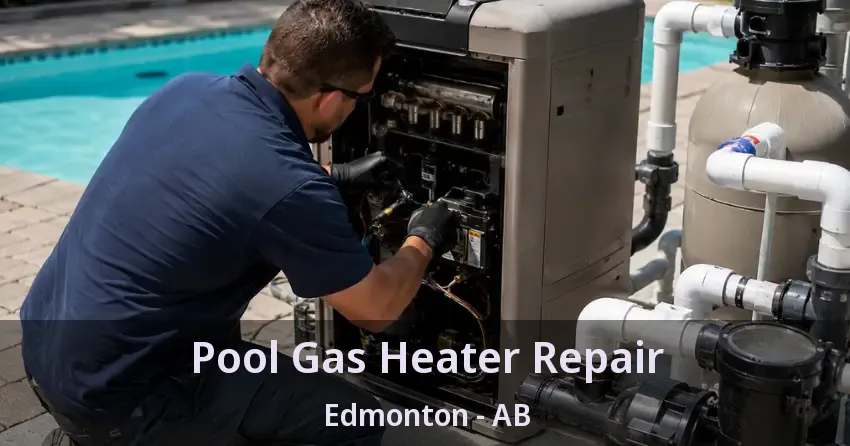
Ignition failure is the most common reason a pool gas heater stops working across Edmonton, usually traced to a worn igniter, a dirty flame sensor, or a gas valve that isn't opening fully. These components wear from thousands of start cycles across a season, and by the time a heater refuses to light at all, the underlying part has often been struggling for weeks.
Pressure switch failures are the second most common cause, particularly on heaters that were not properly winterized the previous fall. A pressure switch reads water flow through the heater and shuts the unit down if it senses inadequate flow, which is a genuine safety feature but also a frequent source of false trips when the switch itself has failed or corroded. Homeowners across Edmonton who skip fall shutdown service see this failure mode more often than those who have the heater properly prepared for winter.
Pool gas heater repair typically costs between $150 and $750 depending on the specific component that failed and whether the part needs to be special-ordered. Sensor and igniter repairs sit toward the lower end, while gas valve or heat exchanger repairs run higher.
This is almost always caused by a fouled or failing flame sensor, or a pressure switch that isn't reading proper water flow within the first few seconds of a cycle. Both issues can often be diagnosed and resolved in a single 1 to 2 hour visit once the specific component is identified.
The most common causes are a tripped breaker, a closed gas valve left over from winterization, or a failed ignition control board. Checking basic power and gas supply first resolves roughly a third of no-start calls before any part needs replacing.
Repair usually makes sense when the heat exchanger is intact and the heater has not needed more than 1 repair in the past year. As a general guide, if repair costs approach half of what a new unit would cost, replacement typically delivers better long-term value.
Most hardware and sensor repairs are completed in a single visit lasting 1 to 2 hours, since technicians carry the most commonly needed parts on the truck. Heat exchanger replacement can take longer if the correct part needs to be special-ordered.
Yes, in most cases the exchanger itself can be replaced without replacing the entire heater, especially on units under 5 years old. On older heaters already showing other wear, the exchanger cost can approach a significant share of a full replacement, which changes the repair-versus-replace decision.
Digital control boards display specific fault codes for pressure, ignition, or flow issues rather than leaving homeowners to guess. A code that returns after resetting the unit twice usually means the underlying component still needs attention, not just a reboot.
Gas Services Edmonton typically offers appointments within the same week for most hardware and sensor repairs. Contact Gas Services Edmonton for current availability and a quote based on your heater's specific symptoms.
A heater that is struggling to ignite properly puts extra stress on every component downstream of the failure point across Edmonton homes. Repeated failed ignition attempts wear the igniter faster, and a burner that is not combusting cleanly can deposit soot inside the heat exchanger, which reduces heat transfer efficiency even after the ignition issue is fixed.
Delaying pool gas heater repair Edmonton past the first sign of trouble typically means a larger repair bill later, since a single failing part rarely stays isolated. A worn gas valve left unaddressed can eventually damage the burner assembly it feeds, turning a moderate repair into a significantly more expensive one. Catching the issue at the first symptom is almost always the cheaper path, and it also reduces the chance of losing use of the pool for an extended stretch during peak swim season.
Most pool gas heater problems announce themselves clearly before the unit fails completely. Recognizing these signs early is what keeps a repair simple instead of letting it snowball into a bigger job.
Any single sign here is worth a call before the next planned swim gets ruined. Multiple signs appearing together across Edmonton homes usually point to a component that has fully failed rather than one that is simply wearing.
A proper diagnosis starts with confirming gas supply and electrical power are both reaching the unit, since a surprising number of service calls across Edmonton turn out to be a tripped breaker or a gas valve left closed after winterization. Once basic supply is confirmed, our technicians move to testing the components most likely to cause the specific symptom reported.
Reading any error code displayed on the control panel narrows the diagnosis considerably before a single part is touched. Modern control boards log specific fault codes for pressure, ignition, and flow issues, and matching that code to the actual symptom prevents the guess-and-replace approach that wastes both time and money on parts that were never the problem. Homeowners across Edmonton who can share the exact code displayed before the technician arrives often get a faster, more accurate quote as a result.
The igniter and flame sensor are tested individually rather than assumed on every visit across Edmonton, since both produce similar symptoms but require different repairs. A weak igniter may spark but never generate enough heat to establish a flame, while a fouled flame sensor can cause the heater to shut down within seconds even when ignition itself succeeded.
Cleaning a flame sensor sometimes resolves the issue without a replacement, which is why our technicians across Edmonton test before ordering parts. Jumping straight to a sensor replacement without confirming the actual fault adds unnecessary cost to a repair that may have needed nothing more than a cleaning. A sensor coated in combustion residue can produce the exact same symptom as a fully failed one, and the two require completely different fixes.
Gas pressure at the valve is measured directly using a manometer, since a valve that looks fine visually can still be delivering incorrect pressure to the burner. Both too little and too much gas pressure cause combustion problems, though the symptoms differ enough that a trained technician can usually narrow the cause before opening the valve itself.
A valve that sticks partially open or closed is a common failure point across Edmonton on heaters that have sat unused over winter without proper preparation. Replacing a gas valve is a job that requires confirming the replacement matches the burner's rated input exactly, since an incorrect valve can create a dangerous combustion imbalance. Our technicians always verify the burner's rated BTU input against the replacement valve's specification before installation, never assuming a visually similar part is a safe substitute.
control boards manage ignition sequencing, safety shutoffs, and error reporting through a single digital circuit, which makes diagnosis considerably faster across Edmonton once a technician knows how to read the fault history. When a board fails outright, replacement is usually the only option, since these components are sealed units that cannot be repaired piece by piece.
Sensor issues on these boards are more often a wiring or connection problem than a board failure itself, and our technicians across Edmonton check connections and continuity before assuming the board needs replacement. A corroded connector or a loose wire can mimic a board fault convincingly enough that skipping this check leads to an unnecessary board swap, which is a meaningfully more expensive repair than cleaning or reseating a connection.
A cracked or leaking heat exchanger is one of the more expensive repairs a pool gas heater can need across Edmonton, and whether it makes sense to repair or replace the full unit depends heavily on the heater's age. On a heater under five years old, exchanger replacement is usually the right call since the rest of the unit still has significant life left in it.
On an older heater already showing other signs of wear, the cost of a new exchanger can approach a meaningful share of what a full replacement heater would cost, which changes the math considerably for homeowners across Edmonton weighing the decision. Our technicians walk through both numbers honestly rather than defaulting to the more expensive repair when replacement genuinely makes more financial sense.
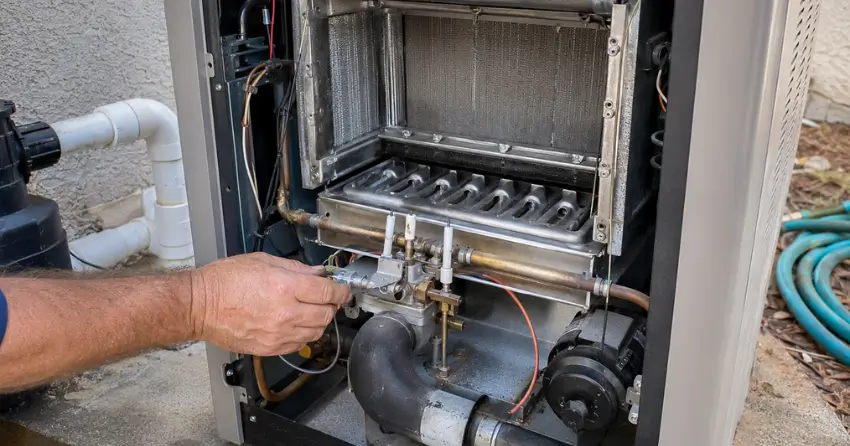
Gas valves and burner assemblies on units follow manufacturer-specific pressure and flow specifications that a generic replacement part cannot always match exactly. Our technicians source manufacturer-correct parts for every repair rather than substituting a compatible-looking valve that was never rated for that specific burner configuration.
Burner corrosion is common on units that have run for several seasons without cleaning, particularly in homes across Edmonton where pool chemicals can drift toward the heater cabinet during service. A burner that is corroded but not yet failed can often be cleaned and restored rather than replaced outright, which keeps repair costs down when the part hasn't actually reached the end of its life. Our technicians assess corrosion severity before recommending a full burner replacement.
A heater with a single failed component, an intact heat exchanger, and no history of repeated breakdowns is almost always worth repairing across Edmonton. The math changes once a heater has needed multiple repairs within a short window or when the failed component is the exchanger itself on a unit already approaching the end of its expected lifespan.
As a general guide, if pool gas heater repair Edmonton costs are approaching half of what a new unit would cost, replacement typically delivers better long-term value. Our technicians provide both numbers before recommending a direction, since the right call depends on the specific heater's age and history rather than a blanket rule that ignores how the unit has actually performed over its lifetime.
Most hardware and sensor repairs are completed in a single visit, since our technicians carry the parts most commonly needed for pool gas heater repair on the truck. A worn igniter, a fouled flame sensor, or a stuck gas valve rarely requires a return trip once the correct part is confirmed, which means most homeowners across Edmonton have their pool back in operation the same day the technician arrives.
Heat exchanger replacement is the main exception, since correctly matched exchangers sometimes need to be special-ordered depending on the heater's brand and age. Our team communicates realistic timing upfront across Edmonton rather than promising same-day turnaround on a repair that genuinely needs a part in transit, so homeowners can plan around the actual timeline instead of an inflated estimate.
Typical costs for pool gas heater repair across Edmonton range from $150 to $750 depending on the specific component that failed and whether the part needs to be special-ordered. Sensor and igniter repairs sit toward the lower end, while gas valve or heat exchanger repairs run higher due to part cost and labor time.
Every quote reflects an actual diagnosis rather than a phone estimate for homes across Edmonton, since two heaters with the same symptom can have very different underlying causes and costs. A heater that won't ignite might need a $30 sensor cleaning or a $400 valve replacement, and there is no way to know which without a technician actually looking at the unit. Contact us via contact us or call (587) 805-0530 for a quote specific to your heater and situation.
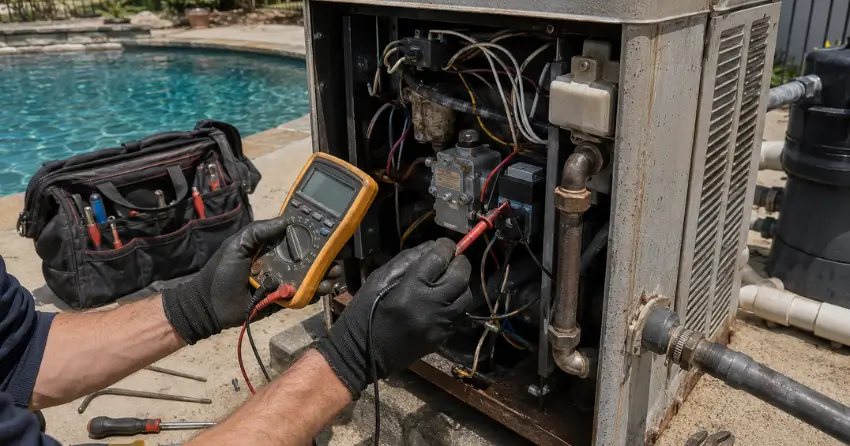
Gas Services Edmonton is fully licensed and insured, and every pool gas heater repair is backed by a workmanship guarantee covering the parts and labor involved. With 15 years of experience repairing gas appliances throughout Edmonton, our technicians diagnose the actual cause of a failure rather than replacing parts on a guess.
We test combustion and confirm proper operation before considering any repair complete across Edmonton, since a heater that ignites is not automatically a heater that is running safely and efficiently. That standard applies to every visit regardless of how minor the repair looks on the surface, because a heater that appears fixed but still combusts incorrectly can develop the same problem again within weeks. To book an assessment, simply contact us or call (587) 805-0530 if you would rather speak with someone directly about what your heater is doing.
A pool heater that has stopped working correctly rarely fixes itself, and every additional week of use on a struggling component adds risk of a bigger failure down the line. Gas Services Edmonton diagnoses the actual cause of pool gas heater repair Edmonton calls rather than guessing at parts, which keeps repair costs focused on what genuinely needs fixing.
Whether the heater refuses to ignite, shuts off within seconds, or simply can't hold temperature anymore, the Gas Services Edmonton team arrives ready to test the real cause and explain exactly what's involved before any work begins.
To book an assessment, contact us or call (587) 805-0530 and our team will confirm a time that works, often within the same week depending on the issue and your location.
Every pool gas heater problem has a specific cause at the component level. Here is what our clients call about most often and what is actually behind each failure.
The flame sensor is a small rod in the burner assembly that confirms to the control board that combustion has been established. As the sensor oxidizes over time, its ability to pass the confirmation signal weakens. The heater will light briefly, fail to confirm the flame, and shut off as a safety measure. This is one of the most common pool gas heater repair calls. Cleaning or replacing the flame sensor restores the ignition sequence and stops the short-cycling.
A gas valve that has degraded internally may fail to open fully, fail to close reliably, or stop opening at all. The heater may attempt to light, produce no flame, and lock out on a pressure or ignition fault. Testing the valve under operating conditions confirms whether the valve itself has failed or whether the control signal from the board is not reaching it correctly. We test both before replacing a valve, since a wiring fault produces identical symptoms.
Scale buildup on heat exchanger tubes from hard water or unbalanced pool chemistry reduces the rate at which heat transfers from the combustion gases to the pool water. The heater runs longer to deliver the same temperature rise, gas consumption increases, and the exchanger operates hotter than intended. Cleaning the exchanger and addressing the water chemistry issue that caused the scale can recover a significant portion of the efficiency that was lost.
A pool gas heater is typically the highest-demand gas appliance on the property. If the supply line is undersized, a shutoff valve is partially closed, or multiple high-demand appliances are running simultaneously, the heater may receive insufficient pressure to operate at rated capacity. This shows up as reduced heating output, weak flame, or nuisance shutdowns on a pressure fault. Measuring supply pressure at the heater inlet is the only reliable way to confirm this as the cause.
Hot surface igniters crack from repeated thermal cycling over time. A cracked igniter may still glow faintly but will not reach the surface temperature needed to reliably light the gas. Spark igniters can lose electrode gap accuracy or develop carbon tracking that redirects the spark away from the gas stream. Testing igniter output confirms which type of failure is present before any part is replaced.
A control board that has partially failed may still power on and display readings while failing to complete specific steps in the operating sequence. The heater may start normally but stop mid-cycle, fail to call for ignition despite receiving a thermostat signal, or produce fault codes that point to components that test perfectly fine. Diagnosing a partial board failure requires testing the board's output signals under real operating conditions rather than reading the fault history alone.
A pool gas heater will not fire if the flow switch detects that water circulation is below the minimum threshold. A faulty flow switch can trigger this shutdown even when flow is adequate. The diagnostic challenge is distinguishing between a genuine low-flow condition from a weak pump or blocked basket and a flow switch that is no longer reading accurately. We measure actual water flow rate and test the switch independently to confirm which situation applies.
A blocked or corroded venting path prevents combustion gases from exiting the heater correctly, which causes the unit to shut down on a high-temperature or pressure fault. Nesting material, debris accumulation at the vent termination, or corrosion that has partially collapsed an older flue section can each cause this. A venting problem that is not identified will continue to cause shutdowns regardless of how many other components are repaired or replaced.
A heater that shut down normally in the fall but will not restart in spring has often been affected by freeze damage, condensation reaching electrical connections over winter, or a control board that failed during storage. This is one of the most common calls we receive at the start of pool season. We inspect the full system at startup, identify what failed over winter, and get the heater running before the season is underway.
Our heater kept shutting off after a few seconds and I assumed it needed a whole new control board. The technician tested the flame sensor first and it just needed cleaning. Saved me a lot of money over what I expected.
The gas valve needed to be special-ordered so it took three extra days beyond the initial visit. Gas Services Edmonton kept me updated the whole time and the heater has run perfectly since it was installed.
The technician found our heat exchanger was cracked on a heater that was already nine years old. He walked me through the repair cost versus a new unit and I ended up replacing it, which was clearly the smarter call.
Called in the morning because our heater would not turn on at all. Turned out to be a tripped breaker and a stuck gas valve. Gas Services Edmonton had us back up and running before the afternoon.
Our display kept showing the same fault code even after resetting it. The technician from Gas Services Edmonton read the code, traced it to a wiring connection instead of the board itself, and fixed it without replacing anything unnecessary.
I appreciated that they tested everything before quoting a repair instead of just guessing. Turned out to be a simple igniter replacement, not the expensive control board I was worried about. Quick and straightforward visit.
Contact Gas Services Edmonton today for expert HVAC repair, installation, and maintenance services in Edmonton area.
Call us directly or send a message using the form, whichever works best for you.
CALL US (587) 805-0530 EMAIL US Click to send a messageContact us! Our conversation stays private.

