
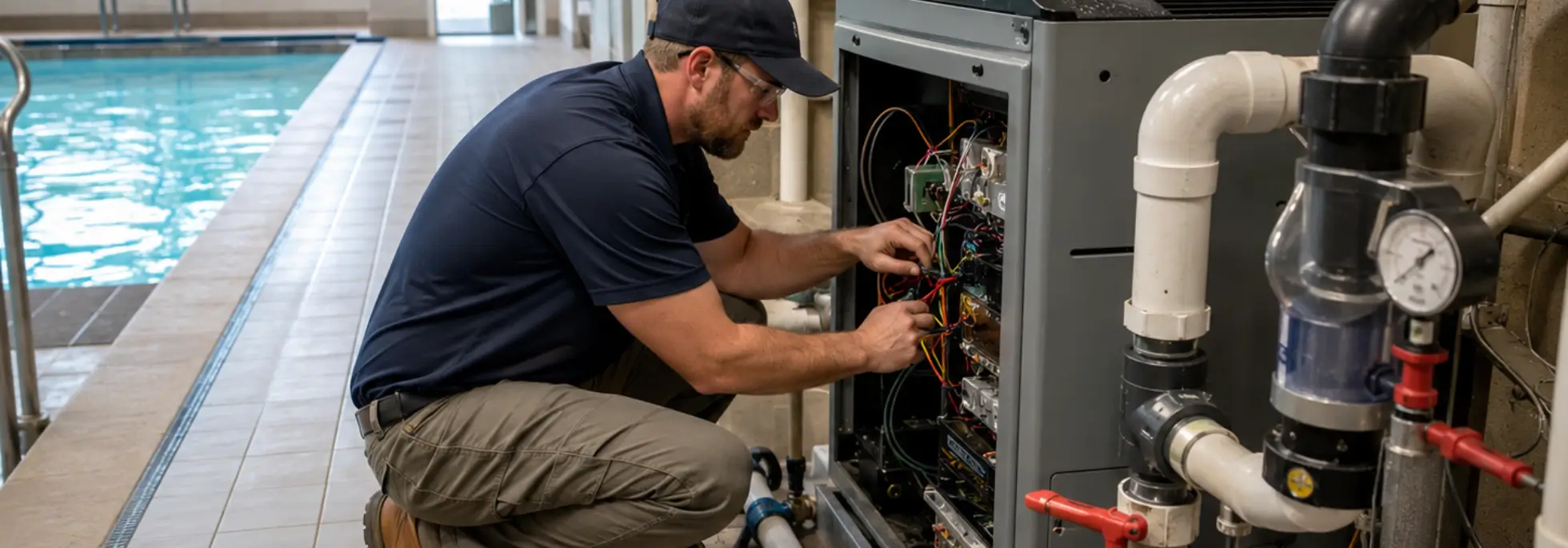
Get Your Quote for Indoor Pool Heater Repair
Fill the form below to inquire about Gas Services Edmonton's Indoor Pool Heater Repair in Edmonton.
Fill the form below to inquire about Gas Services Edmonton's Indoor Pool Heater Repair in Edmonton.
You have already tried resetting the breaker and checking the thermostat. The pool still will not heat. With Indoor Pool Heater Repair Edmonton, Gas Services Edmonton finds the real cause and fixes it correctly the first time.
Indoor pool heaters combine gas or electrical components with constant moisture exposure, which is exactly the kind of equipment that should never be diagnosed by guesswork. Homeowners across Edmonton often call after already trying a few things themselves, and that is completely reasonable, but a pool heater involves combustion safety and code compliance that go well beyond swapping a part and hoping it works. Choosing the right technician for this job matters as much as the repair itself.
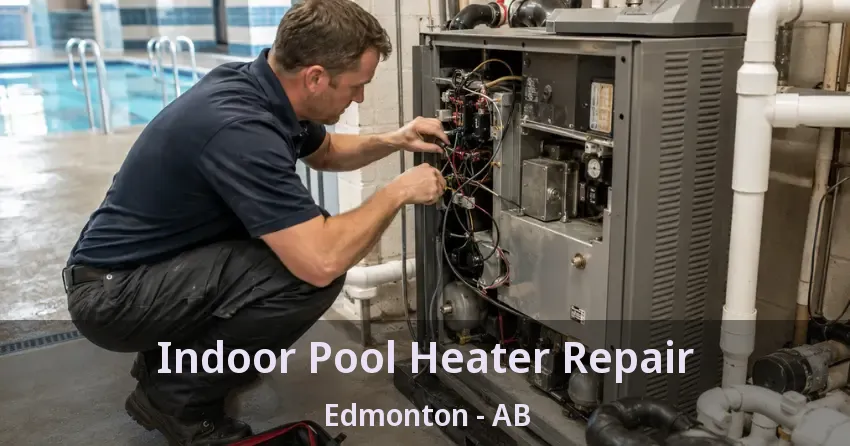
Gas-fired pool heaters require a technician licensed to work on gas appliances, not a general handyman or pool cleaning service. Locally, that means holding the proper gas technician certification, since improperly serviced gas connections and venting create genuine carbon monoxide and fire risks. A technician without that licensing may be able to swap an obvious part, but cannot legally or safely diagnose combustion, venting, or gas supply issues, and working with an uncertified installer can leave a homeowner without recourse if something goes wrong later.
Electric and heat pump pool heaters bring a different set of qualifications into play, since these units involve high-voltage electrical connections operating near water. A properly qualified technician understands both the electrical code requirements for wet-location equipment and the refrigeration cycle that heat pump models rely on. Homeowners across Edmonton evaluating a provider for Indoor Pool Heater Repair Edmonton should ask directly what licensing covers their specific heater type, since gas certification and electrical qualification are not interchangeable.
Insurance and liability coverage round out the credentials worth confirming before any work begins. A technician working near pool water without proper liability coverage exposes the homeowner to real risk if something goes wrong during the repair. Our team across Edmonton carries full coverage on every visit, and we are always willing to share that documentation before starting work rather than only when asked directly.
Typical costs for indoor pool heater repair range from $170 to $1,200 depending on the specific component involved and whether the unit is gas, electric, or a heat pump model. An ignitor, sensor, or thermostat replacement sits toward the lower end, while heat exchanger issues land higher. Contact Gas Services Edmonton for a quote specific to your heater.
Yes. Gas-fired pool heaters require a technician holding proper gas certification, since improperly serviced gas connections and venting create genuine carbon monoxide and fire risks. A general handyman or pool cleaning service is not qualified or legally permitted to diagnose combustion or venting issues.
A heater that will not ignite at all is most often caused by a failed ignitor, a dirty flame sensor, or a gas supply issue rather than a problem with the heater's core components. These are usually straightforward, affordable fixes that rarely require replacing major parts.
Repair is right for most problems, since they typically involve a single component like an ignitor or sensor. Replacement becomes the smarter option once a heater is 10 to 12 years old and needs a cracked heat exchanger repaired, since that part often costs close to a comparable new heater installed.
Most straightforward repairs involving stocked parts like ignitors, sensors, or thermostats are completed in a single same-week visit. Repairs requiring a specific manufacturer part on an older or less common model sometimes take a few extra days once the part is confirmed and ordered.
A heat pump that has lost heating capacity is most often a refrigerant issue rather than an electrical one, since these units operate more like a refrigeration system than a traditional heater. Diagnosing this correctly requires equipment and training specific to refrigeration work.
It can. Many manufacturers require documented professional servicing to keep a pool heater's warranty valid, and a repair performed by an unlicensed or unfamiliar technician can sometimes void that coverage. Using a properly credentialed technician protects existing manufacturer warranty coverage.
Ask what licensing the technicians hold for gas or electrical work, whether the diagnostic fee applies toward the repair, what warranty covers parts and labor, and whether genuine manufacturer parts are used. A reputable provider answers these directly without hesitation.
A thorough diagnostic starts with checking the obvious first: power supply, gas supply, thermostat settings, and any visible error codes on the unit's control panel. Skipping this step and jumping straight to a part replacement is the most common way a repair visit fails to actually fix the problem, since two different failures can display nearly identical symptoms to the homeowner.
Once the basics are confirmed, our technicians across Edmonton move to component-level testing: checking the ignition sequence on gas units, verifying refrigerant pressure on heat pumps, and inspecting the heat exchanger for cracks or scaling that reduce efficiency. This sequence matters because replacing the wrong component wastes both time and money on a heater that still will not warm the pool afterward. It is the same disciplined process behind every Indoor Pool Heater Repair Edmonton visit our team completes, regardless of how obvious the symptom initially appears.
A heater that will not ignite at all is most often caused by a failed ignitor, a dirty flame sensor, or a gas supply issue rather than a problem with the heater's core components. These are usually straightforward fixes for a qualified technician and rarely require replacing major parts.
A cracked heat exchanger is the one item on this list that usually points toward replacement rather than repair, since the part often costs close to what a new heater would cost once labor is included. Every other item on this list is typically a straightforward, cost-effective fix handled during a standard Indoor Pool Heater Repair Edmonton visit without needing a full equipment swap.
Gas, electric resistance, and heat pump pool heaters each fail in fundamentally different ways, and a technician's diagnostic approach has to shift accordingly. Gas heaters center around combustion: ignition, gas pressure, and venting are the primary systems that fail, and any repair touching these components requires the gas licensing discussed earlier.
Heat pump units operate more like a refrigeration system than a traditional heater, pulling heat from the surrounding air and transferring it to the pool water. A heat pump that has lost heating capacity is often a refrigerant issue rather than an electrical one, which means diagnosing it correctly requires equipment and training specific to refrigeration work, not just general electrical troubleshooting. Our technicians across Edmonton carry the gauges and training needed to diagnose refrigerant-side problems accurately rather than guessing based on symptoms alone.
Pool heater manufacturers each design proprietary ignition sequences, control boards, and heat exchanger materials, which means a repair on a unit follows a different diagnostic path than a competing model. Our technicians across Edmonton carry documentation and stock common replacement parts for the major residential pool heater brands sold in the region, so a unit gets serviced according to its actual engineering specifications.
Warranty coverage is another reason brand-specific knowledge matters. Many manufacturers require documented professional servicing to keep a heater's warranty valid, and a repair performed by an unlicensed or unfamiliar technician can sometimes void that coverage. Our team documents every visit thoroughly, which protects a homeowner's existing manufacturer warranty rather than putting it at risk.
Indoor pool heaters require correct venting to the outside, since combustion gases from a gas-fired heater cannot be safely vented into the pool room itself. This is not a detail that can be shortcut, and any technician working on an indoor gas pool heater across Edmonton must verify that venting meets current code before returning the unit to service.
Combustion analysis, a test that measures how efficiently and safely a gas heater is actually burning fuel, catches problems that are invisible on a simple visual inspection. Homeowners across Edmonton working with a properly credentialed technician receive this kind of thorough combustion safety check as a standard part of the repair, not an optional upsell tacked onto the bill. It typically adds only a few minutes to the visit but provides real assurance the unit is operating correctly rather than just appearing to work.
Years of hands-on experience with pool heater equipment shows up in the speed and accuracy of a diagnosis, not just in the final repair. A technician who has serviced hundreds of units recognizes patterns quickly, such as which symptoms typically point to a scaled heat exchanger versus a failing pressure switch, saving homeowners across Edmonton both time and unnecessary parts replacement during an Indoor Pool Heater Repair Edmonton visit.
Experience also shows in how a technician communicates during the visit. Rather than using technical jargon without explanation, an experienced professional walks a homeowner through what was found, why it happened, and what the repair actually involves in plain language. That kind of clear communication is itself a signal of genuine competence, since a technician who fully understands the problem can usually explain it simply.
Asking the right questions before booking a repair protects both your budget and your safety. A reputable provider should answer these clearly without hesitation or vague deflection.
A provider that answers these directly, without hesitation, is generally a safer bet than one that deflects specific questions about credentials or process. Vague answers to straightforward questions about licensing or warranty coverage are themselves a useful signal, since a provider confident in their qualifications has no reason to avoid a direct answer.
It is also worth asking how the company handles a repair that turns out to be more involved than the initial estimate suggested. A trustworthy provider explains the change clearly and gets approval before proceeding with additional work, rather than presenting a surprise total at the end of the visit.
Same-week appointments are realistic across Edmonton for most straightforward diagnostic and repair visits, since our technicians carry common ignitor, sensor, and control board parts on the truck. A cold pool room during the swim season is not something most households want to wait weeks to resolve, and our scheduling reflects that urgency.
Repairs requiring a specific manufacturer part, particularly on an older or less common heater model, sometimes take a few extra days to complete once the part is confirmed and ordered. We communicate that timeline clearly at the diagnostic visit rather than leaving homeowners across Edmonton guessing about when their pool will be warm again, and we follow up proactively if a part's arrival changes from the original estimate.
Repair is the right call for the overwhelming majority of pool heater problems, since most failures involve a single component like an ignitor, sensor, or pressure switch rather than the heater's core structure. These repairs are typically fast, affordable, and restore full function without touching the heat exchanger at all.
Replacement becomes the smarter option once a heater is approaching 10 to 12 years old and the needed repair is a cracked heat exchanger, since that single part often costs close to what a comparable new heater would cost installed. Our team across Edmonton is upfront when a repair no longer makes financial sense, since recommending an expensive fix on an aging unit does not serve the homeowner's actual interest.
A useful rule of thumb for deciding between the two: if the quoted repair cost approaches half of what a new comparable heater would cost installed, replacement typically delivers better long-term value. That comparison resets the clock on the entire unit rather than extending the life of a heater that may need further attention within a year or two regardless of the current fix. We walk homeowners across Edmonton through that math honestly during every Indoor Pool Heater Repair Edmonton consultation involving an older unit.
Typical costs for Indoor Pool Heater Repair Edmonton in the area range from $170 to $1,200 depending on the specific component involved and whether the unit is gas, electric, or a heat pump model. An ignitor, sensor, or thermostat replacement sits toward the lower end, while heat exchanger issues or extensive electrical work land higher. Contact us via contact us or call (587) 805-0530 to get a quote specific to your heater and situation.
Every quote reflects an actual diagnostic visit rather than a phone estimate, since two heaters showing the same symptom can have very different underlying causes and costs for homes across Edmonton. We explain exactly what was found and what it will take to fix before any repair work begins.
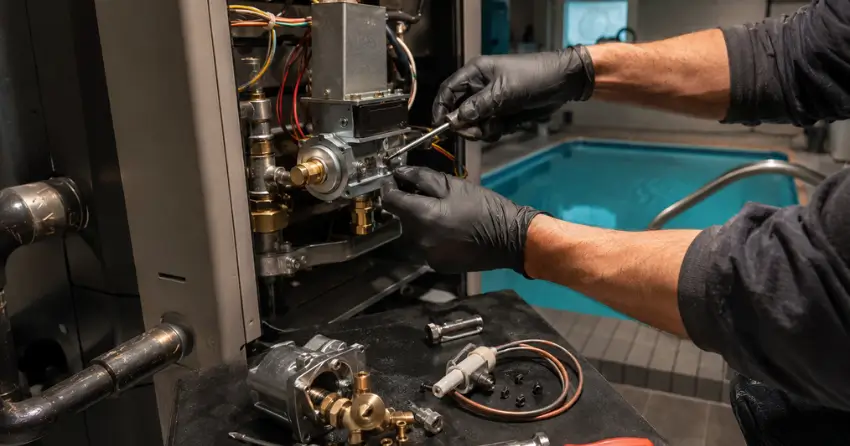
Gas Services Edmonton is fully licensed and insured, and every Indoor Pool Heater Repair Edmonton job is backed by a workmanship guarantee covering both parts and labor. With 15 years of hands-on experience working on gas and electrical pool equipment throughout Edmonton, our technicians hold the credentials required to safely diagnose and repair both gas-fired and electric heating systems.
We never recommend a repair that is not genuinely needed, and every diagnosis reflects documented testing rather than a guess made on the spot. That transparency is part of why households across Edmonton trust Gas Services Edmonton with their pool equipment year after year instead of searching for a new provider every time something breaks.
Our technicians also stay current on manufacturer training as pool heater technology evolves, particularly around heat pump systems that have become more common in recent years. Keeping that knowledge current means a homeowner across Edmonton gets a technician who understands their specific equipment, not one applying general knowledge to a system they rarely encounter.
A pool heater problem is not something worth risking on an unlicensed repair, given the combustion safety and electrical code considerations involved in this specific type of equipment. Gas Services Edmonton schedules Indoor Pool Heater Repair Edmonton appointments quickly, because a cold pool during swim season is both an inconvenience and a real disruption to how a household uses its home.
Whether the issue is a heater that will not ignite, one that is not reaching temperature, or a control board acting erratically, our credentialed team arrives ready to diagnose the actual cause across Edmonton rather than guessing. To book an assessment, contact us or call (587) 805-0530 and our team will confirm a time that works for your schedule, along with what to expect during the visit itself.
Pool heater failures usually have a clear mechanical cause. Here are the problems property owners bring to us most often, and what is actually behind them.
This usually points to a flame sensor that has stopped sending a hold signal to the control board, causing the board to shut down the gas valve immediately after ignition. It can also result from insufficient gas pressure at the manifold, which causes the flame to drop below the sensor's detection threshold. We test the ignition sequence from spark through flame hold to identify exactly where the cycle is breaking down.
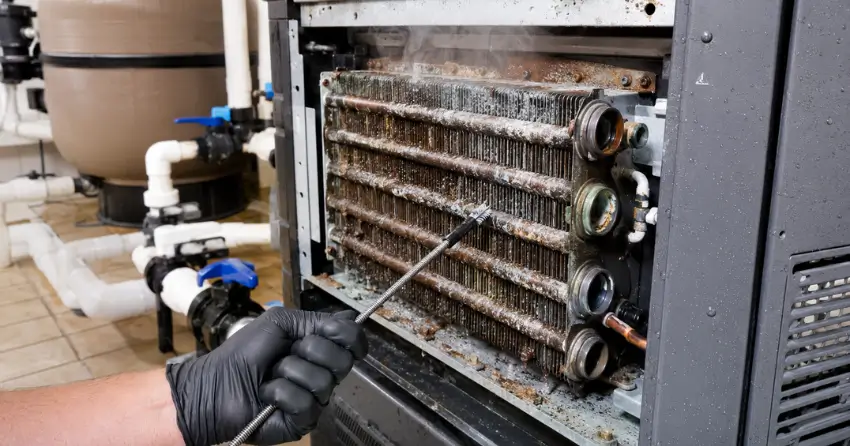
A heater that runs full cycles but fails to bring the water to temperature is most often dealing with heat exchanger scaling from calcium deposits. Scale buildup on the heat exchanger tubes acts as insulation, reducing how much heat transfers from the burner to the pool water. Descaling the heat exchanger or, in more advanced cases, replacing it restores the heat transfer efficiency the unit was designed to deliver.
A fault code that keeps returning after reset is a sign that the triggering condition has not been resolved. The most common repeat faults involve flow switch signals, high-limit switch trips from restricted water circulation, and pressure switch faults from air in the line or a degraded switch membrane. Diagnosing the actual component behind the code, rather than resetting the board and hoping, is the only way to stop the cycle.
A gas odour near the heater is a condition that requires immediate shutdown and professional inspection before the unit is run again. The most common sources are a gas valve not seating fully, a loose or corroded fitting on the supply line, or a burner manifold connection that has degraded over time. This is not a symptom to monitor, it is a symptom to address that day.
Water beneath the heater usually indicates either a cracked heat exchanger allowing pool water to bypass internally and exit through cabinet seams, or a failed plumbing connection at the inlet or outlet fittings. A cracked heat exchanger typically requires replacement of the component. The source of the leak determines whether the repair is internal to the heater or at the plumbing connections outside the cabinet.
A pool heater that runs without cycling off is either working against a heat exchanger too scaled to transfer heat effectively, operating in conditions where the pool volume or temperature differential exceeds the unit's designed output, or has a thermostat or control board fault causing it to misread the current water temperature. Continued operation in this state accelerates component wear and increases the risk of a high-limit fault trip.
The high-limit switch trips when the heat exchanger temperature exceeds a safe threshold, which can be caused by restricted water flow through the unit, a scaled heat exchanger reducing internal flow, or a dirty pool filter limiting circulation pump output. A high-limit switch that has drifted out of calibration can also trip at temperatures below the actual safety threshold. We check water flow rate, filter condition, and heat exchanger condition before testing the switch itself.
A complete failure to ignite can originate at the igniter, the pilot assembly, the gas valve, or the control board. If the ignition spark is audible but no flame follows, the gas valve or gas supply is the likely source. If no spark occurs, the igniter itself or its wiring connection is where the fault typically sits. A systematic test of each component in the ignition sequence identifies the failure point without unnecessary parts replacement.
A heater that shut down normally in the fall but will not restart in spring has often been affected by freeze damage to internal components, condensation reaching electrical connections over winter, or a control board that failed during storage. This is one of the most common calls we receive at the start of indoor pool season. We inspect the full system at startup, identify what failed over winter, and get the heater running before the season is underway.
I called three companies and Gas Services Edmonton was the only one that clearly explained their gas licensing without me having to ask twice. The technician found a failed ignitor in under twenty minutes and had it fixed the same visit.
We thought we just needed a new thermostat but the technician found our venting was slightly out of code from a previous installer. Genuinely glad they caught it during the same visit instead of just fixing the obvious symptom.
Our heater needed a specific manufacturer part that took almost a week to arrive since our model is older. The technician kept us updated throughout and the repair itself was done well once the part showed up.
Our heater is almost 11 years old and the technician was upfront that the heat exchanger repair would cost nearly as much as a new unit. Really appreciated the honest breakdown instead of just pushing the more expensive repair.
A previous company tried an electrical fix on our heat pump that didn't work. Gas Services Edmonton brought the right gauges and found it was actually a refrigerant issue. Fixed properly on the first visit.
Our pool was ice cold right before a family gathering and Gas Services Edmonton got a technician out within two days. Clear explanation of the diagnostic, fair pricing, and the pool was warm again well before our guests arrived.
Contact Gas Services Edmonton today for expert HVAC repair, installation, and maintenance services in Edmonton area.
Call us directly or send a message using the form, whichever works best for you.
CALL US (587) 805-0530 EMAIL US Click to send a messageContact us! Our conversation stays private.

