
Get Your Quote for Indoor Air Quality Testing
Fill the form below to inquire about Gas Services Edmonton's Indoor Air Quality Testing in Edmonton.
Fill the form below to inquire about Gas Services Edmonton's Indoor Air Quality Testing in Edmonton.
The air inside a home can look perfectly clean and still carry pollutants five times higher than the air outside. Indoor Air Quality Testing Edmonton replaces that uncertainty with an actual measured answer.
Most contaminants that affect indoor air are invisible and odorless, which means a home can genuinely look, smell, and feel fine while still carrying elevated levels of mold spores, volatile organic compounds, or combustion byproducts. Gas Services Edmonton performs Indoor Air Quality Testing Edmonton using the same sampling equipment and lab analysis methods professional environmental testers rely on. This replaces guesswork based on visible symptoms alone or the assumption that a clean-looking home is automatically a healthy one to live in day after day.
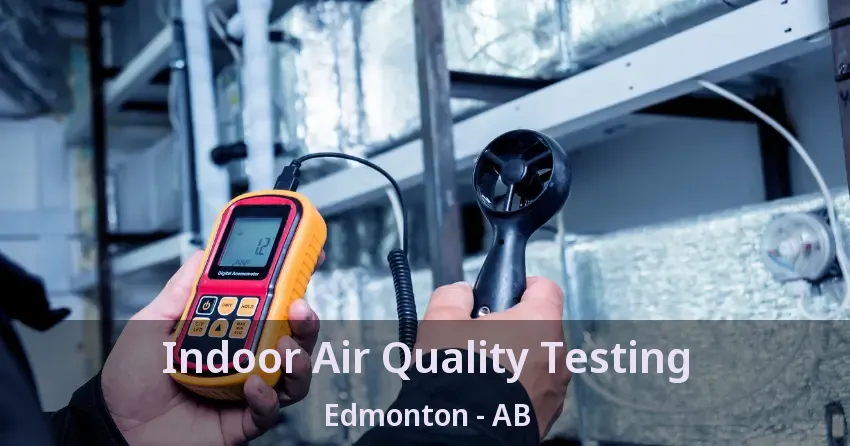
A professional test across Edmonton measures specific, identifiable contaminants rather than giving a vague overall score. Common targets include mold spores, volatile organic compounds released from household products and materials, carbon monoxide, radon, and particulate matter from dust, pet dander, and combustion sources. Each contaminant requires its own sampling method and lab analysis, which is why a genuine test covers multiple collection techniques rather than a single generic reading that lumps everything together into one imprecise and ultimately unhelpful number.
Homes across Edmonton vary widely in what shows up during testing, since contaminant sources depend on age of construction, ventilation design, recent renovations, and even the specific products used inside the home. A newer, tightly sealed home can trap VOCs at higher concentrations than an older, drafty one. An older home is more likely to show elevated mold or particulate readings tied to aging materials and original construction methods used decades ago before modern building standards were widely adopted.
Indoor Air Quality Testing with Gas Services Edmonton is priced starting from $99 to $299, depending on the number of contaminants tested and the size of the home. A single-concern targeted test sits toward the lower end, while a full whole-home panel sits higher.
A professional test measures specific contaminants including mold spores, volatile organic compounds, carbon monoxide, radon, and particulate matter from dust and pet dander. Each contaminant requires its own sampling method and lab analysis rather than a single generic reading.
A standard residential test takes 1 to 3 hours on-site depending on home size and the number of sampling locations required. Results from the accredited lab typically return within 2 to 10 days depending on which contaminants were tested.
A whole-home panel makes sense if you have no specific known concern and want a complete picture. Targeted testing is the better choice when you already suspect a specific issue, such as mold after a known leak, since it costs less and returns results faster.
No, not for a comprehensive picture. Most DIY kits test for only one or two contaminants and lack the lab-grade accuracy of professional sampling equipment. A kit that misses a genuine problem provides false reassurance that can delay addressing a real issue.
Persistent headaches or fatigue that improve away from home, unexplained allergy symptoms, musty odors without a visible source, recent water damage, and homes built before 1980 are all signs worth investigating with a professional test.
Avoid cleaning or vacuuming in the 24 hours before testing, keep windows and doors closed leading up to the visit, and turn off any air purifiers so the reading reflects genuine baseline air quality rather than a filtered result.
Yes. A clean, accredited test report can be a genuine selling point for buyers concerned about mold, radon, or VOCs. A written report from a professional test carries more credibility with buyers and insurers than a DIY result.
A thorough test begins with a walkthrough of the home to identify likely sampling locations, since air quality can vary meaningfully from room to room depending on ventilation and use. Our technicians across Edmonton note visible signs of moisture, mold, or ventilation issues during this initial pass before any samples are collected. These observations help guide which specific tests make the most sense for the home and its particular history of construction, renovation, and use.
Sample collection follows across Edmonton, using air pumps, canisters, and surface swabs depending on which contaminants are being tested. Each sample is labeled and sent to an accredited lab for analysis, since accurate contaminant identification requires equipment beyond what a technician can assess on-site. Results typically take several days to return, after which our team reviews the findings with the homeowner in plain language rather than a technical report full of unexplained figures that would otherwise leave more questions than answers about what the numbers actually mean.
Certain contaminants show up repeatedly across residential testing, and knowing what they are helps homeowners understand what a report is actually measuring.
Homes across Edmonton tested for these reasons most often uncover one or more of the following biological or chemical sources, sometimes in combinations that point to a broader issue.
These contaminants tend to come from a different set of sources than mold or VOCs, often tied to combustion, geology, or general household activity rather than moisture.
Some homes show elevated levels of one contaminant in isolation, while others show a combination that points to a broader ventilation or moisture problem affecting multiple readings at once across different rooms of the house.
Certain symptoms and household situations point clearly toward the need for professional testing rather than guessing at the cause. Homeowners across Edmonton experiencing any of these should consider scheduling a test sooner rather than later, since the underlying cause is rarely obvious without an actual measurement taken by properly calibrated equipment and analyzed at an accredited lab.
Any one of these on its own is worth investigating across Edmonton. Several together usually mean the air quality issue has been developing for a while, and testing is the fastest way to identify exactly what is responsible before the situation worsens further or affects household health more seriously over the coming months.
A standard residential test takes one to three hours on-site, depending on home size and the number of sampling locations required. Larger homes or those requiring more extensive sampling across Edmonton naturally take longer than a straightforward single-family assessment, particularly when multiple contaminants are being tested at once and each one requires its own separate collection method and equipment setup.
After the visit across Edmonton, samples go to an accredited lab, and results typically return within two to ten days depending on which contaminants were tested. Our team then walks homeowners through the written report, explaining what was found and whether levels are within a safe range. We also discuss what steps make sense if something needs attention, without pressuring anyone into unnecessary remediation or add-on services they do not actually need to pursue right away.
A whole-home panel tests for the full range of common contaminants across every major living space, while targeted testing focuses on one specific concern already suspected. Choosing between them depends on whether a homeowner has a specific trigger or simply wants a general baseline understanding of their air, and both approaches serve genuinely different purposes for different situations depending on what prompted the interest in testing in the first place. Our team helps homeowners decide which approach fits before booking, based on a short conversation about what prompted the call and what the household actually wants to know from the results before any appointment is confirmed.
A whole-home panel is the right choice for homeowners across Edmonton without a specific known concern who simply want a complete picture before making decisions about ventilation, filtration, or renovation. It is also the more cost-effective option per contaminant tested when multiple concerns exist. Combining tests into one visit reduces the overall cost compared to booking separate appointments for each individual contaminant of interest across several visits scheduled independently over time and at added expense to the household budget over the course of a year.
Targeted testing makes more sense when a homeowner already suspects a specific issue, such as mold after a known leak or radon in an area with known elevated levels. This narrower approach across Edmonton costs less and returns results faster than a full panel when the concern is already identified. There is no need to sample for contaminants that are not genuinely in question during this particular visit or appointment scheduled for a specific and clearly defined purpose from the outset, saving both time and money for the household in question without sacrificing accuracy.
DIY test kits are inexpensive and widely available across Edmonton, but most test for only one or two contaminants and lack the lab-grade accuracy of professional sampling equipment. A kit that misses a genuine problem provides false reassurance, which is arguably worse than no test at all. It can delay a homeowner from addressing a real issue that a proper test would have caught early, before it became a larger and more expensive problem to resolve down the road for the household involved.
Professional testing across Edmonton uses calibrated equipment and accredited lab analysis, giving results homeowners can actually rely on for a health decision or a real estate transaction. The written report from a professional test also carries credibility a DIY result simply does not, particularly if the findings ever need to be shared with a buyer, an insurer, or a family member making a health-related decision that depends on accurate, defensible data.
A few simple steps before the appointment across Edmonton help ensure accurate results and a smoother testing process overall. Avoid cleaning or vacuuming in the 24 hours before testing, since this can temporarily disturb dust and skew particulate readings in ways that do not reflect the home's genuine everyday air quality across normal daily living conditions. Keep windows and doors closed leading up to the visit to maintain normal indoor conditions. Turn off any air purifiers running in the home so the reading reflects genuine baseline air quality rather than a filtered result that would understate any real contaminant levels present.
Homeowners across Edmonton should also mention any specific concerns, odors, or recent renovations to the technician before testing begins, since this context helps determine which sampling locations and contaminants deserve extra attention during the visit. This upfront communication often makes the difference between a generic test and one genuinely tailored to the home's specific history, layout, and circumstances.
Indoor Air Quality Testing Edmonton with Gas Services Edmonton is priced starting from $99 to $299, depending on the number of contaminants tested and the size of the home. A single-concern targeted test sits toward the lower end, while a full whole-home panel sits higher. Call (587) 805-0530 or contact us to book an appointment and get pricing specific to your situation and your specific concerns about the home's current condition and history, whatever those concerns happen to be at the time of booking.
Every test includes the full written lab report and a walkthrough of the findings. Homeowners across Edmonton leave with a clear understanding of their results rather than a stack of numbers to interpret on their own without any professional context or explanation of what those numbers actually mean for daily life and long-term comfort in the home.

Gas Services Edmonton is fully licensed and insured, and every test is backed by a satisfaction guarantee on the accuracy and thoroughness of the process. With 15 years of experience serving households throughout Edmonton, our technicians use the same accredited lab and sampling standards that professional environmental testers rely on for real estate and health-related assessments. This is not a shortcut version meant to save time or cut corners on the sampling process itself and the resulting laboratory analysis afterward.
We explain findings in plain language rather than handing over a report full of unexplained numbers, and we never recommend remediation that is not genuinely supported by the test results. That honesty is why households across Edmonton trust our team for testing that informs a real decision. It is not just about checking a box for a real estate transaction or a passing concern that turns out to be nothing at all once the results actually come back from the accredited lab and are reviewed together.
Invisible contaminants do not announce themselves the way a leak or a broken appliance does, which is exactly why testing matters most when nothing seems obviously wrong. Gas Services Edmonton makes it simple for households across Edmonton to get a clear, accredited answer about what is actually in their air, rather than guessing based on symptoms alone or hoping the problem resolves itself without any real intervention, measurement, or professional attention.
Whether you have a specific health concern, recent water damage, or simply want a baseline understanding of your home's air, our team approaches every test across Edmonton with the same accredited standard. To get started, contact us or call (587) 805-0530 and our team will confirm an appointment and walk through which tests make sense for your home and your specific situation before anything is scheduled or confirmed with your household.
We have seen every air quality concern a home can have. Here are the problems our clients call us about most often.
Radon is an odourless, colourless radioactive gas that seeps from the soil and bedrock beneath homes and accumulates in basements and lower levels. Health Canada sets the residential action level at 200 Bq/m3, and many older homes exceed this without any visible or detectable sign. We measure radon concentrations using professional-grade sampling and provide clear guidance on mitigation if levels require action.
Carbon monoxide is produced when gas appliances, furnaces, water heaters, or fireplaces do not combust fuel completely, typically due to a cracked heat exchanger, blocked flue, or improper venting. Because it is odourless and colourless, it can reach dangerous concentrations before anyone realizes a problem exists. We test CO levels at multiple points in the home and identify the appliance or venting condition that may be contributing.
Volatile organic compounds off-gas from paints, adhesives, flooring underlayment, cabinetry, furnishings, and cleaning products, often at elevated rates in newly renovated spaces. Persistent high VOC exposure is linked to respiratory irritation, headaches, and long-term health effects. We measure VOC concentrations across the home and identify whether ventilation adjustments or specific source removal is the appropriate response.
Mold can establish in wall cavities, under flooring, in ductwork, and behind finishes long before it becomes visible from living areas. Elevated airborne mold spore counts often trace back to a moisture source such as a slow leak, inadequate vapour barrier, or insufficient bathroom or kitchen ventilation. We measure spore counts and help identify the moisture conditions that are allowing growth to occur.
Relative humidity that stays persistently above 50 percent creates conditions for mold growth, condensation on cold surfaces, deterioration of wood structural elements, and general discomfort. In cold-climate homes, high indoor humidity also leads to frost and moisture accumulation in attic spaces and wall assemblies. We measure humidity levels across the home and identify where mechanical ventilation or dehumidification may be needed.
Fine airborne particles smaller than 2.5 microns in diameter penetrate deeply into the respiratory system and are linked to cardiovascular and pulmonary health concerns with long-term exposure. Sources include combustion appliances, candles, attached garages, and outdoor infiltration through gaps in the building envelope. We measure particulate concentrations at multiple sizes and identify whether filtration or source control is the more effective response.
Carbon dioxide concentrations above 1,000 ppm in occupied spaces indicate that fresh air exchange is insufficient for the number of occupants and activities in the home. Inadequate ventilation allows all other indoor pollutants to accumulate more rapidly. We measure CO2 as a ventilation proxy and assess whether the home's mechanical ventilation system is providing adequate fresh air exchange for the building's occupancy and envelope tightness.
Persistent stale or musty air typically points to a combination of insufficient ventilation, elevated humidity, and a biological source such as mold or accumulated organic debris in the ductwork or drain pan. While the symptom is common, the specific cause varies by home. We assess the contributing factors through systematic measurement rather than assuming a single source is responsible for the overall air quality condition.
Persistent headaches, nausea, or lightheadedness that improve after leaving the home can sometimes indicate low-level carbon monoxide or gas exposure from an undetected leak or combustion issue. If multiple household members experience these symptoms without an obvious cause, a full indoor air quality assessment is warranted immediately. We test the entire gas supply system, all appliance connections, and air quality across the home.
We had persistent headaches and couldn't figure out why. The technician from Gas Services Edmonton found elevated mold spores behind a wall we never suspected. Glad we finally got it tested properly.
The written lab report had a lot of numbers I didn't understand at first, but the technician walked through every line and told us exactly what mattered. No pressure to buy anything extra.
The appointment itself was quick and professional, but our results took closer to two weeks instead of the estimated ten days since we tested for several contaminants at once. Worth the wait though.
We wanted air quality testing done before closing on an older home. Gas Services Edmonton got us a full report within a week and confirmed everything was within safe ranges, which made the decision much easier.
We were worried about radon given our home's age and location. The test came back well within safe levels and the technician explained exactly how the sampling worked. Reassuring to have real numbers instead of guessing.
I expected to be told we needed expensive remediation but the Gas Services Edmonton technician was upfront that our readings were normal and nothing needed fixing. Appreciated the honesty over an unnecessary upsell.
Contact Gas Services Edmonton today for expert HVAC repair, installation, and maintenance services in Edmonton area.
Call us directly or send a message using the form, whichever works best for you.
CALL US (587) 805-0530 EMAIL US Click to send a messageContact us! Our conversation stays private.

