
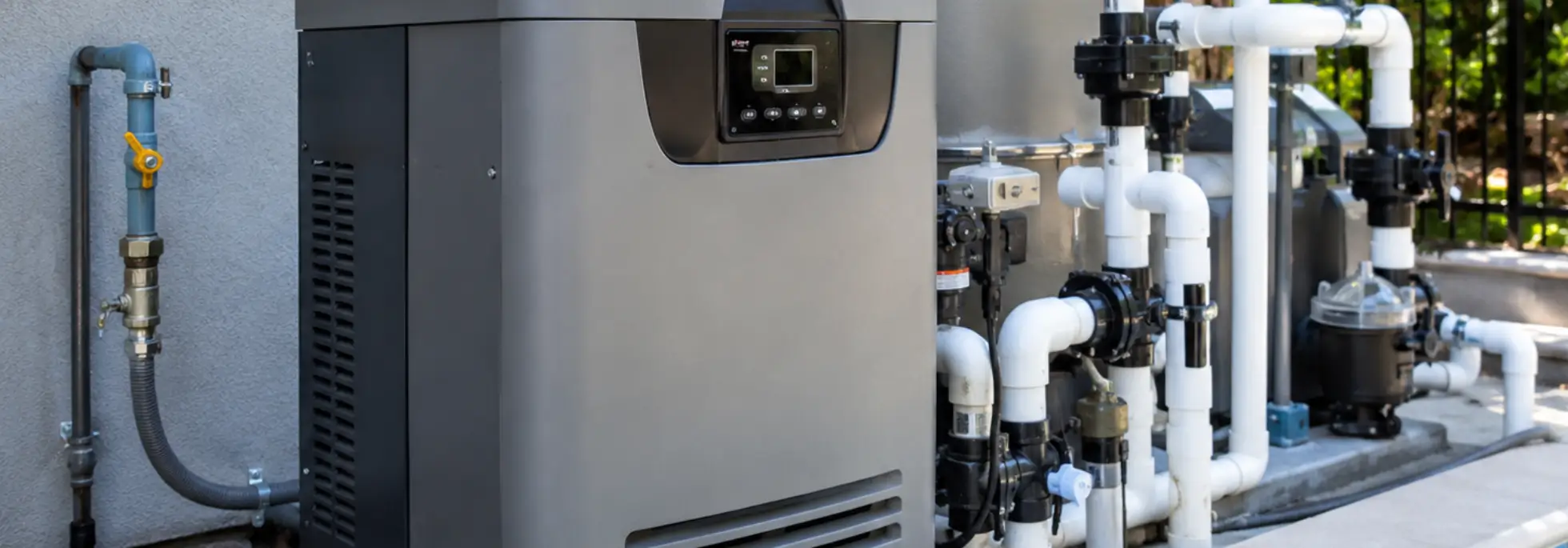
Get Your Quote for Pool Gas Heater
Fill the form below to inquire about Gas Services Edmonton's Pool Gas Heater in Edmonton.
Fill the form below to inquire about Gas Services Edmonton's Pool Gas Heater in Edmonton.
Most swim season problems trace back to one piece of equipment doing all the work. Pool Gas Heater Edmonton service keeps that equipment running the way it should, from the first warm day to the last.
A pool gas heater is not a set-it-and-forget-it appliance. It runs through thousands of ignition cycles across a season, moves gas through a valve train under constant pressure changes, and pushes heated water through a metal exchanger that expands and contracts with every cycle. Our team installs, services, and repairs gas pool heaters for homeowners in Edmonton who want a heating system that starts reliably and holds temperature without surprises. Getting the installation and sizing right from day one is what separates a heater that lasts a decade from one that struggles by its third summer.
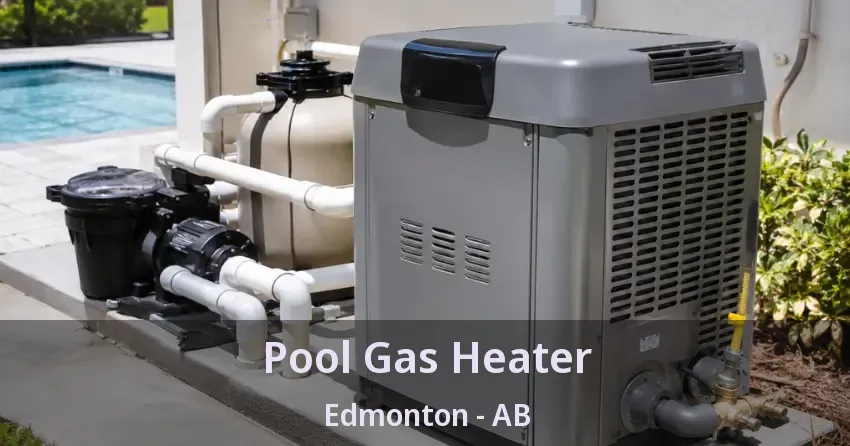
A pool gas heater burns natural gas or propane inside a combustion chamber, then passes that heat through a metal heat exchanger while pool water circulates around or through it. The water absorbs heat as it passes, then returns to the pool warmer than it left, which is exactly what homeowners in Edmonton notice first after a heater is installed. This process repeats continuously while the heater runs, which is why gas heaters can raise pool temperature by several degrees in a matter of hours rather than the days a solar system might need.
Unlike a heat pump, which pulls ambient warmth from the surrounding air and works best in mild weather, a gas heater generates its own heat directly through combustion. That makes it the more dependable choice for homeowners across Edmonton who want to swim on a 55-degree evening in May or extend the season into a cool September. The tradeoff is fuel cost, but for households that want the pool ready on demand rather than gradually, a direct combustion heat source delivers results a heat pump cannot match on a cold day.
A new pool gas heater installation typically costs between $2,500 and $5,500 depending on BTU size, whether a dedicated gas line is needed, and how much of the existing plumbing and electrical can be reused. Homes with adequate existing gas capacity sit toward the lower end of that range.
Sizing depends on pool surface area, wind exposure, and how quickly you want the water to heat, with most residential pools needing a heater in the 150,000 to 400,000 BTU range. A pool with a cover typically needs less capacity than an uncovered pool of the same size since covers reduce overnight heat loss.
A properly installed and maintained gas pool heater typically performs well for 8 to 12 years before major components need frequent attention. Water chemistry has a major effect on lifespan, since poorly balanced pH and sanitizer levels accelerate corrosion inside the heat exchanger.
Natural gas heaters cost less to run per hour, often around $9 an hour compared to roughly $20 an hour for propane, and connect to an existing municipal line for homes that already have gas service. Propane heaters produce more heat energy per unit of fuel and are the default option for homes without municipal gas access, but they require a tank and periodic refilling.
A correctly sized gas pool heater can raise water temperature within 14 hours or less, and often several degrees within just a few hours, which is significantly faster than a solar or heat pump system that can take one to three days. Actual heat-up time depends on pool volume, starting water temperature, and outdoor conditions on the day.
Yes. Saltwater pools require a heater with a cupro-nickel heat exchanger rather than standard copper, since copper exposed to saltwater can corrode within a single season. Installing the wrong exchanger material is one of the most common causes of premature failure on saltwater conversions.
Most gas pool heaters benefit from 2 service visits per year: a spring startup check that confirms safe combustion before the first swim, and a fall shutdown visit that protects the exchanger and sensors from freeze damage. Skipping either visit is one of the most common reasons heaters develop preventable issues.
Gas Services Edmonton installs and services all major pool gas heater brands, including units rated from 150,000 to 400,000 BTU, and sources manufacturer-correct parts for every repair. Contact Gas Services Edmonton for a quote specific to your pool size and household gas capacity.
A proper Pool Gas Heater Edmonton installation starts with confirming gas supply capacity, since an undersized gas line will starve the burner and prevent the unit from reaching its rated output. Our technicians calculate the total BTU demand of the home, including any existing gas appliances, before determining whether the existing line can support a new pool heater or whether a dedicated line is needed.
Once gas supply is confirmed, the unit is set on a level pad with proper clearance from combustible material, connected to the pool's plumbing circuit, and wired to the electrical and control system. Venting is checked to confirm exhaust gases clear the unit safely, since improper venting on a gas appliance is a genuine safety issue rather than a minor installation detail for homes across Edmonton. A final combustion test measures gas pressure and flame characteristics before the job is considered complete, confirming the heater is burning cleanly rather than just turning on.
Sizing a pool gas heater by BTU output determines how fast it heats and how efficiently it runs, and getting this number wrong is the most common mistake in DIY heater selection. A heater sized too small for the pool's surface area will run constantly and never quite hold temperature on colder days, while an oversized unit short-cycles and wastes fuel without meaningfully improving heat-up time. Surface area, average wind exposure, and desired temperature rise all factor into the correct BTU calculation for homes across Edmonton.
Pools with a cover typically need less heating capacity than uncovered pools of the same size, since a cover slows evaporative heat loss significantly overnight. Our team measures the actual pool dimensions in Edmonton and asks about cover usage before recommending a BTU size, rather than defaulting to a generic size chart that ignores how the pool is actually used.
Our team installs and services pool gas heaters for homeowners across Edmonton who want a unit backed by strong manufacturer support and widely available replacement parts. These units are engineered with corrosion-resistant heat exchangers and digital control boards that make diagnosing a fault considerably faster than older analog systems, which matters when a homeowner wants the pool back in service quickly.
Choosing between models usually comes down to BTU output, exchanger material, and whether the pool uses standard chlorine or a saltwater system, since saltwater setups need a heater rated for that added corrosion exposure. Our technicians across Edmonton walk through the available lineup and match a specific model to the pool's size and water chemistry rather than recommending a one-size-fits-all option.
Natural gas and propane pool heaters use nearly identical internal components, but the fuel source changes both the running cost and the installation requirements for homes across Edmonton. Natural gas heaters connect to an existing municipal gas line and generally cost less to run per hour, while propane heaters draw from an on-site tank and produce more heat energy per unit of fuel, which can mean faster heat-up times in some cases.
Homes without access to a municipal gas line default to propane, which requires tank placement, a dedicated supply line, and periodic refilling that natural gas households never have to think about. For homeowners across Edmonton who do have gas service already running to the house, connecting a pool heater to that existing line is usually the simpler and more cost-effective path, provided the line has enough capacity to support the additional appliance.
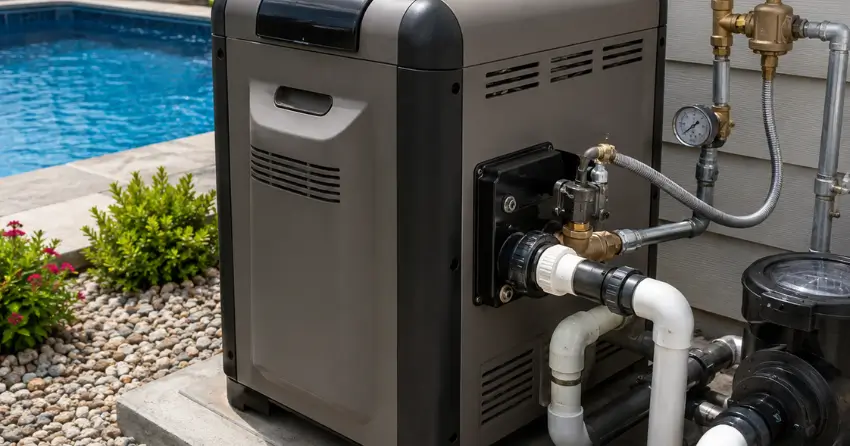
A pool gas heater rarely fails without warning first. Most breakdowns are preceded by specific symptoms that a homeowner can catch before the unit stops working entirely, which is why paying attention to small changes matters more than most people realize.
Any of these signs on their own is worth a call before the next swim session gets ruined. Several appearing together across Edmonton homes usually means the unit needs a full diagnostic rather than a single part swap.
A properly installed and maintained pool gas heater typically performs well for 8 to 12 years across Edmonton before major components start requiring more frequent attention. That lifespan depends heavily on water chemistry, since poorly balanced pool water accelerates corrosion inside the heat exchanger far faster than normal operating wear ever would.
Homeowners across Edmonton who keep pH and sanitizer levels within the recommended range consistently get more years out of a heater than those who let chemistry drift for weeks at a time. Annual professional service, including a combustion check and a visual inspection of the exchanger, catches early corrosion before it becomes a leak that forces an unplanned replacement mid-season. A heater that receives no service at all often shows meaningful wear within half its expected lifespan, since small issues left unaddressed tend to compound rather than stay isolated.
The heat exchanger is the single most expensive component inside a pool gas heater, and it is also the part most affected by water chemistry over time. When a unit develops a leak or a cracked cell, our technicians across Edmonton confirm whether the exchanger itself has failed or whether the symptom actually points to a different component before recommending a full replacement.
Genuine manufacturer parts matter more here than in most home service repairs, since a mismatched exchanger or gasket can create pressure imbalances that shorten the life of the replacement part. We source correct components for every repair across Edmonton rather than substituting a generic part that fits but was never engineered for that specific model. Using the wrong gasket thickness or an off-spec header can create a slow leak that takes weeks to become obvious, which is why matching the original part number matters even when a cheaper universal option looks tempting.
Cupro-nickel exchangers resist saltwater corrosion significantly better than standard copper, which is why saltwater pool systems across Edmonton require a cupro-nickel-rated heater rather than a standard chlorine-pool model. Installing a copper exchanger on a saltwater pool typically shortens its working life dramatically, sometimes failing within a single season if the salt concentration runs on the higher end.
Homeowners converting a chlorine pool to saltwater should confirm their existing heater's exchanger material before making the switch, since the wrong pairing is one of the most common causes of premature heater failure our technicians encounter across Edmonton conversions. Checking the exchanger material takes only a few minutes during a service visit, but it prevents a costly mistake that often does not show symptoms until the following season.
The gas valve regulates fuel flow to the burner and is one of the more failure-prone components on any gas heater across Edmonton, particularly on units that sit dormant over winter without proper preparation. A sticking or worn valve can cause delayed ignition, inconsistent flame, or a heater that will not shut off properly once target temperature is reached.
Ignition components, including the igniter and flame sensor, wear from thousands of start cycles across a typical swim season and are among the most commonly replaced parts during a service visit. Testing these components individually rather than assuming a single cause helps our technicians avoid replacing parts that were never actually the problem, which keeps repair costs focused on what actually failed instead of a guess-and-check approach.
Spring startup service is the single most valuable appointment for a pool gas heater each year across Edmonton, since it catches winter corrosion, confirms the gas valve and igniter are functioning correctly, and verifies safe combustion before the unit runs its first cycle of the season. Skipping this step and simply flipping the heater on for the first swim of the year is how minor issues turn into mid-season breakdowns.
Fall shutdown service matters just as much for pool gas heater Edmonton owners, since properly draining water from the exchanger and protecting sensors from freeze damage prevents the exact failures that show up the following spring. Our technicians recommend both visits as a pair rather than treating either one as optional, since a heater winterized correctly in the fall almost always starts up cleanly the following spring with no surprises.
Typical costs for a new pool gas heater installation across Edmonton range from $2,500 to $5,500 depending on BTU size, gas line modifications needed, and whether existing plumbing and electrical connections can be reused. A standard-sized unit on a home with adequate existing gas capacity sits toward the lower end, while larger pools or homes needing a dedicated gas line run higher.
Every quote reflects an in-person assessment of the home's existing gas service and pool plumbing rather than a phone estimate, since gas line capacity is the single biggest variable in a pool gas heater Edmonton installation cost. Homeowners who need a new dedicated gas line typically land toward the higher end of the range, while homes with sufficient existing capacity keep the project closer to the base cost. Contact us via contact us or call (587) 805-0530 for a quote specific to your pool and home.
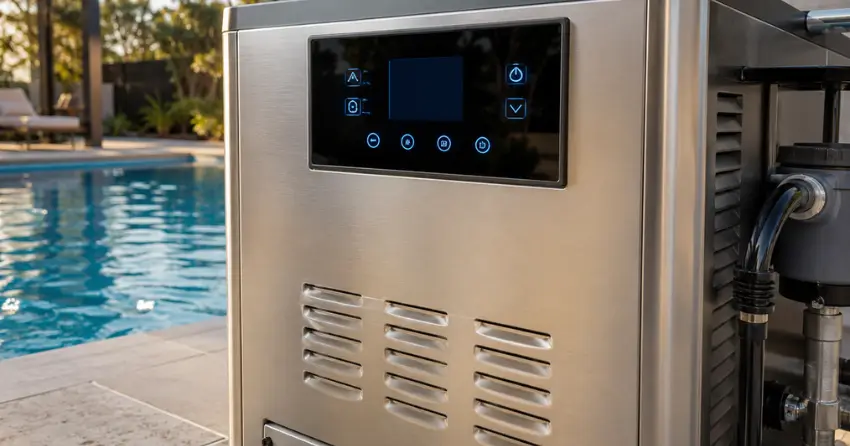
Gas Services Edmonton is fully licensed and insured, and every pool gas heater installation and repair is backed by a workmanship guarantee covering both the labor and the components involved. With 15 years of experience installing and servicing gas appliances throughout Edmonton, our technicians understand exactly how local water conditions, seasonal shutdowns, and gas supply variations affect a pool heater's long-term performance.
We test combustion on every installation and every repair before calling the job complete, since a heater that turns on is not the same as a heater burning safely and efficiently. That standard is why households across Edmonton trust Gas Services Edmonton with equipment tied directly to gas safety rather than treating it as a routine appliance install.
A pool gas heater that starts reliably and holds temperature consistently is not a matter of luck. It comes down to correct sizing, proper installation, and seasonal service that catches small issues before they become mid-summer breakdowns. Gas Services Edmonton handles the full scope of pool gas heater Edmonton work, from initial installation through years of ongoing maintenance and repair.
Whether you are installing a heater for the first time, replacing an aging unit, or bringing a neglected heater back into proper working condition, our team walks through the options honestly and recommends what actually fits your pool and household.
To schedule an assessment, contact us or call (587) 805-0530 and our team will confirm a time that works for your home and pool setup.
Most pool gas heater problems follow a recognizable pattern. Here is what Gas Services Edmonton handles most often and what is actually behind each issue.
A heater that lights and then cuts out within seconds is usually responding to a safety sensor. The most common culprits are a flame sensor coated with oxidation that cannot confirm combustion to the control board, or a flow switch activating because water circulation is below the minimum threshold. We test the full ignition and flow sequence to identify the specific trigger rather than replacing components at random.
Slower heating is typically caused by burner fouling that reduces combustion output, scale buildup on the heat exchanger that blocks heat transfer, or low gas supply pressure limiting how much energy the unit can produce. Each cause has a different fix, and mistaking one for another leads to unnecessary expense. We measure actual output and identify the specific factor that has reduced heating capacity.
A heater that does not fire is often dealing with a failed hot surface igniter, a spark ignition module that has lost its timing, a gas valve not opening fully, or a control board not completing the ignition sequence. We test each stage of the ignition circuit systematically to locate the failure point before any part is ordered or replaced.
Any gas odour at or near the heater should be treated as urgent. Common sources include a corroded or loose fitting on the supply line connection to the gas valve, a valve body seal that has degraded over time, or a joint in the supply line that has shifted. We locate the source using proper detection equipment, repair the fitting or component, and verify the full supply line before the heater is returned to service.
A pool that loses temperature rapidly overnight usually has more to do with heat retention than the heater itself, but a heater that fails to cycle on correctly during overnight temperature drops may have a thermostat or aquastat not responding accurately to the water temperature. We test the control system under actual operating conditions to confirm it is calling for heat at the right temperature and responding correctly when the pool needs recovery.
Increased gas consumption without a corresponding change in pool heating performance often points to a burner running inefficiently due to fouling, a heat exchanger with scale buildup requiring longer run times, or a gas valve not modulating correctly on variable-output units. We check combustion efficiency, heat exchanger condition, and valve operation to identify where the fuel is being wasted.
Modern pool gas heaters display fault codes that point toward a general category of problem but rarely identify the exact cause. A pressure fault code could mean the gas supply, the gas valve, or a sensor. A high-temperature code could point to flow, combustion, or the heat exchanger. We interpret fault codes in the context of actual system testing rather than using them as a direct replacement guide.
Rumbling during startup usually indicates incomplete combustion or a delayed ignition caused by a partially blocked burner or gas valve issue. A persistent low roar during operation can indicate flame instability. Clicking that does not resolve into steady combustion points to ignition timing or flame sensing problems. Each sound pattern has a specific cause, and we identify the source through combustion testing and component inspection rather than guessing.
A heater that shut down normally in the fall but will not restart in spring has often been affected by freeze damage, condensation reaching electrical connections over winter, or a control board that failed during storage. This is one of the most common calls we receive at the start of pool season. We inspect the full system at startup, identify what failed over winter, and get the heater running before the season is underway.
Another company quoted us a heater that was way too small for our pool. Gas Services Edmonton actually measured everything and explained the BTU math before recommending a bigger unit. Water heats up fast now and we are not fighting the system.
Our existing gas line was not big enough so they had to run a new one, which pushed the install out by about four days. The final result works perfectly and the technician kept us updated the whole time.
We converted to saltwater last year and the technician from Gas Services Edmonton immediately flagged that our old heater had a standard copper exchanger. Swapped it for the correct saltwater-rated unit before it corroded through. Really glad they checked.
We signed up for the spring startup visit this year instead of just flipping the heater on ourselves. They found a worn igniter that would have failed mid-June and swapped it right there. Heater has run without a hiccup all season.
The whole crew was efficient and explained every step, from the gas pressure test to the final combustion check. Our old heater used to short cycle constantly and this new setup runs smooth and quiet.
I called expecting a simple part swap but the technician found the heat exchanger was cracked and explained why patching it would not hold. Gas Services Edmonton walked me through the replacement cost clearly and there were no surprises on the bill.
Contact Gas Services Edmonton today for expert HVAC repair, installation, and maintenance services in Edmonton area.
Call us directly or send a message using the form, whichever works best for you.
CALL US (587) 805-0530 EMAIL US Click to send a messageContact us! Our conversation stays private.

