
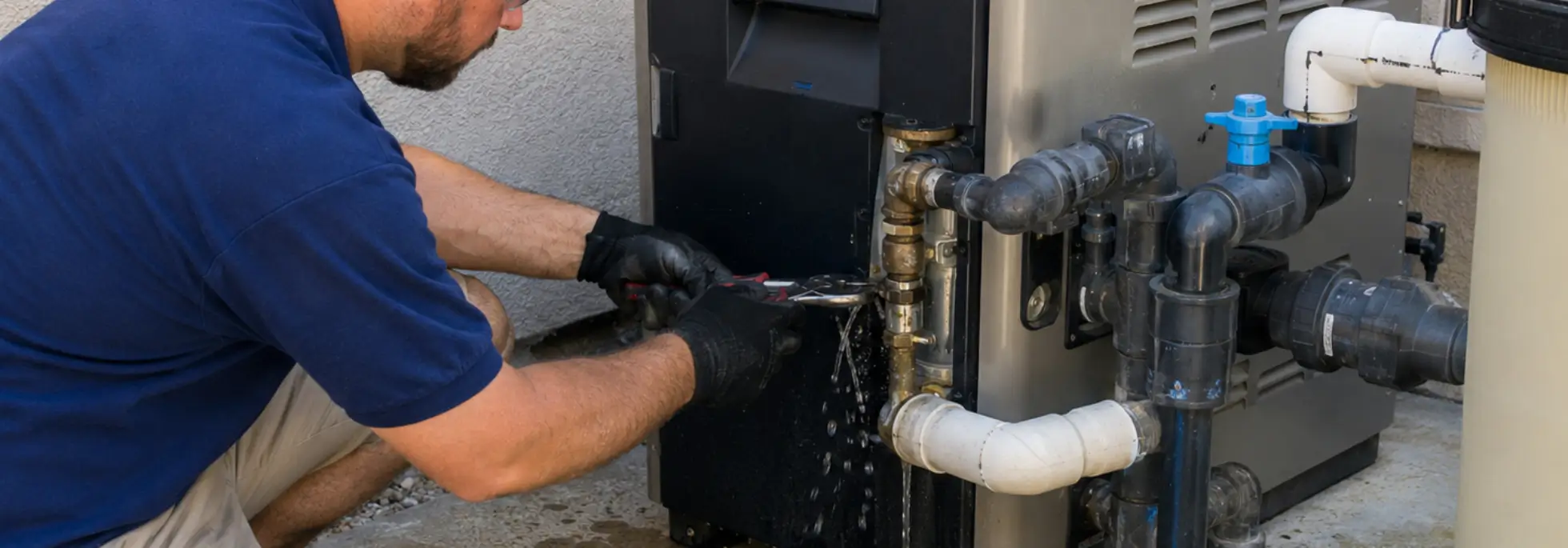
Get Your Quote for Pool Heater Leak Repair
Fill the form below to inquire about Gas Services Edmonton's Pool Heater Leak Repair in Edmonton.
Fill the form below to inquire about Gas Services Edmonton's Pool Heater Leak Repair in Edmonton.
You have already tightened the fittings and checked the obvious spots. The puddle keeps coming back. Pool Heater Leak Repair Edmonton finds the real source instead of guessing at gaskets.
Gas Services Edmonton handles enough leak calls across Edmonton to know the pattern well: a homeowner notices water pooling near the heater, tightens what looks loose, and the leak returns within days because the actual source was never identified. A leak that keeps reappearing after a DIY fix almost always means the problem sits somewhere less obvious, whether that is the heat exchanger itself, a plumbing connection under pressure, or a fitting that only weeps once the unit reaches full operating temperature. Getting the diagnosis right the first time saves homeowners from paying for the same repair twice, and it avoids the slow water damage that a hidden leak can cause to the surrounding pad and equipment over an entire season.
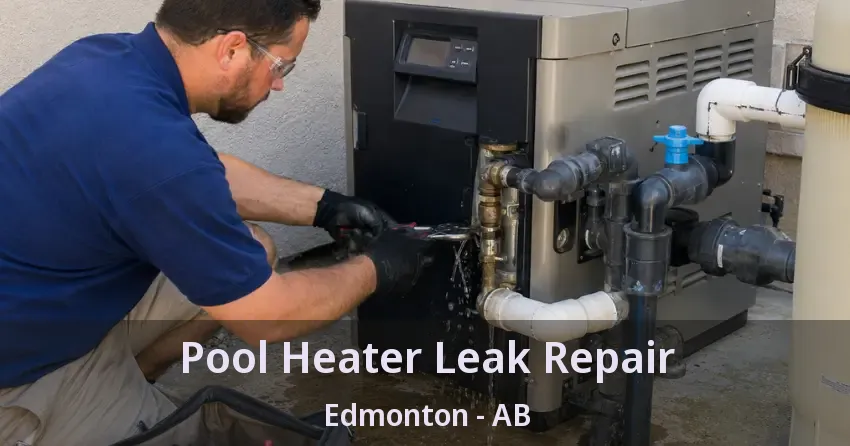
A pool heater leak across Edmonton traces back to one of four places: the heat exchanger, a plumbing connection or union, the pressure relief valve, or a gasket and seal. Each source behaves differently and points to a different repair, which is why an accurate diagnostic inspection matters more than the leak itself. Water dripping steadily from the bottom of the cabinet usually points to the heat exchanger, while a leak isolated to a specific fitting or union points to plumbing rather than the heater's internal components.
Our technicians across Edmonton start every leak call the same way: dry the area completely, run the system, and watch with a flashlight to see where the water actually first appears. Puddles on the pad are often just gravity finishing the job from a leak higher up, which means chasing the visible puddle instead of the actual source leads to a repair that does not hold.
Simple gasket or fitting repairs typically range from $150 to $800. More involved repairs requiring a heat exchanger header replacement can run between $800 and $1,500 depending on the model and part availability. Contact Gas Services Edmonton for a quote specific to your leak's location and cause.
A leak that returns after tightening usually means the actual source was never identified. Common overlooked causes include a corroding heat exchanger, a weeping gasket, or a fitting further along the plumbing than the visible puddle suggests. A proper diagnostic inspection traces the leak to its real origin rather than the first loose-looking part.
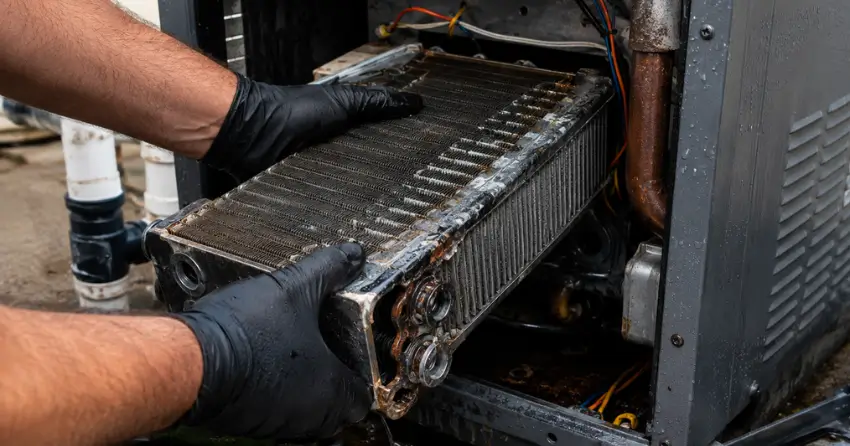
An isolated pinhole leak on an otherwise healthy heat exchanger can usually be repaired by soldering or brazing the affected section. Widespread corrosion across the copper tubing generally requires replacing the entire heat exchanger, which typically costs close to half the price of a new heater.
It can become dangerous if water pools near electrical components, which is a genuine safety risk requiring immediate attention. Most leaks are not urgent on their own, but a leak that is visibly worsening over a day or two or paired with rust spreading rapidly across the cabinet should be inspected right away.
Low pH and unmanaged chlorine are the leading cause, since acidic water actively eats away at the copper or cupro-nickel tubing every time it circulates. Damage from consistently unbalanced water chemistry can begin within weeks, which is why keeping pH, alkalinity, and calcium hardness tested regularly protects the heater.
Most simple gasket, fitting, and union repairs are completed in a single visit, typically under two hours. Heat exchanger header repairs or full component replacements can take a day or two longer if the specific part needs to be sourced.
A properly repaired heat exchanger paired with balanced water chemistry can go another 10 to 15 years without a repeat leak. Adding a check valve to prevent chemical backflow from downstream feeders significantly reduces the chance of a new leak developing at the same location.
Repair makes sense for Pool Heater Leak Repair Edmonton when the leak is isolated to a gasket, a fitting, or a section of plumbing, and the heat exchanger itself is still structurally sound. These repairs are routine, cost a fraction of a heat exchanger replacement, and restore full function without touching the heater's most expensive component. A pinhole leak caught early on an otherwise healthy heater is almost always worth repairing.
Replacement of the heat exchanger becomes the harder conversation across Edmonton once corrosion has spread across the copper tubing rather than staying isolated to one small area. A corroded heat exchanger cannot be patched reliably, and replacing just that component typically costs close to half of what a full new heater would cost. On a unit already past eight to ten years old, that math usually favors a full replacement rather than sinking a heat exchanger's worth of money into an aging unit.
Low pH and unmanaged chlorine are the leading cause of heat exchanger corrosion across Edmonton, since acidic water actively eats away at the copper or cupro-nickel tubing every time it circulates through the heater. Damage from consistently unbalanced water can begin within weeks rather than years, which is why a heater that seemed fine at the start of the season can develop a leak partway through it.
Chlorinators and acid feeders installed downstream of the heater on the return line can send concentrated chemical-rich water directly into the heat exchanger when the pump shuts off, accelerating corrosion at a rate normal circulation would not cause. Installing a check valve between the heater and any downstream chemical feeder prevents this backflow for homes across Edmonton and is a simple fix our technicians can add during a repair visit, often at minimal added cost to the appointment.
A proper Pool Heater Leak Repair Edmonton diagnostic visit starts by ruling out condensation, which is normal during the first ten to thirty minutes of operation and should never be mistaken for a real leak. If water continues appearing well past that window or shows up during the heater's idle periods, our technicians move to a systematic inspection of headers, manifolds, unions, and the heat exchanger itself.
Pressure testing individual sections of plumbing across Edmonton isolates whether the leak originates in the heater's internal components or in the surrounding pipe connections, since two heaters showing the identical symptom of a puddle nearby can have completely different underlying causes. Getting this diagnosis right the first time is what separates a repair that holds from one that reappears within a season, and it is why our technicians never skip straight to replacing the first part that looks worn.
Corroded copper nipples on the intake side are a common failure point on several heat exchanger models serviced across Edmonton, and pitting or greenish corrosion at these connections is usually visible on close inspection. Small leaks in this area can sometimes be repaired by soldering or brazing after thorough cleaning, though extensive corrosion generally requires replacing the affected header section rather than attempting a patch.
Our team stocks the specific gaskets, headers, and fittings that fail most often on units serviced across Edmonton, which keeps most repair visits to a single appointment rather than a return trip for a special-order part. Matching the exact component specification also matters here, since an improperly matched header or gasket can create uneven stress at the mounting points and cause a new leak within months of the original repair.
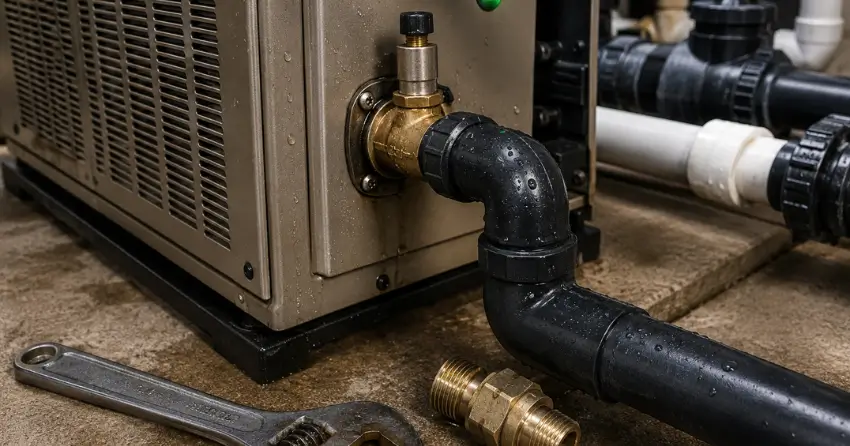
A leak isolated to a union or threaded connection rather than the heater itself is usually the simpler and less expensive repair for homes across Edmonton, requiring fresh Teflon tape, a new O-ring, or a tightened union rather than any work on the heater's internals. Vibration and repeated temperature cycling loosen these connections gradually, which is why a heater that has run for several seasons without issue can still develop a plumbing leak with no change to the unit itself.
Bypass valves installed near the heater make this kind of repair considerably faster for homeowners throughout Edmonton, since our technicians can isolate the heater from the rest of the system without draining the whole pool. Where a bypass does not already exist, adding one during a leak repair visit is worth considering for any future service work, since it turns what would otherwise be a half-day drain-and-refill job into a simple valve turn.
Most Pool Heater Leak Repair Edmonton calls are not emergencies, but a few signs mean the visit should not wait for a routine appointment. Water pooling near electrical connections, a leak that has visibly worsened over just a day or two, or rust staining spreading rapidly across the cabinet are all signals that the underlying damage is progressing faster than normal wear would explain.
Homeowners across Edmonton dealing with any of these signs should schedule a diagnostic visit promptly rather than waiting for a routine appointment slot. The cost difference between an early repair and a delayed one can be significant, especially once corrosion has had time to spread beyond a single repairable section into surrounding components.
Rubber gaskets and O-rings inside a pool heater across Edmonton dry out and lose their seal gradually rather than failing all at once, which means a leak from this source often starts as a slow weep that only becomes noticeable after weeks of gradual worsening. Heat cycling, exposure to pool chemicals, and simple age all contribute to this kind of wear, and it affects both gas heaters and heat pumps equally.
Homeowners sometimes assume a slow leak can wait since the heater still functions normally, but a weeping gasket left alone typically accelerates once the seal has started to fail. Our technicians handling Pool Heater Leak Repair Edmonton replace the specific gasket or O-ring at the identified location rather than a blanket rebuild, which keeps the repair cost proportional to the actual problem rather than padding the invoice with unnecessary parts.
Typical costs for Pool Heater Leak Repair Edmonton in the area range from $150 to $800 depending on whether the fix involves a simple gasket or fitting versus a heat exchanger header repair. More involved repairs requiring a full heat exchanger replacement can run higher, generally landing between $800 and $1,500 depending on the model and part availability. Contact us via contact us or call (587) 805-0530 to get a quote specific to your leak's location and cause.
Every quote reflects an actual diagnostic inspection rather than a phone estimate, since two heaters with the same visible puddle can have very different underlying causes and repair costs. We walk through exactly what we find before recommending any repair, so homeowners across Edmonton know what they are paying for and why before any work begins.
A pool heater leak across Edmonton rarely improves on its own, and letting it continue can mean gradually worsening corrosion around the connection or, in the case of a plumbing leak, water pooling near electrical components. Most simple gasket, fitting, and union repairs are completed in a single visit since our trucks carry the parts that fail most often across the models we service.
Heat exchanger header repairs or full component replacements occasionally require a specific part to be sourced for homes across Edmonton, which can add a day or two depending on the manufacturer and model. Our technicians confirm parts availability during the diagnostic visit so there is no ambiguity about the repair timeline once the cause is identified, and we keep homeowners updated if a part needs to be ordered rather than leaving them guessing.
Keeping pool water balanced is the single most effective way to prevent a repaired heat exchanger from developing a new leak within a season for homes needing Pool Heater Leak Repair Edmonton again. Testing pH, alkalinity, and calcium hardness two to three times a week and keeping a documented record protects both the heater and any warranty claim tied to water chemistry that a manufacturer might otherwise deny.
A properly repaired heat exchanger paired with balanced water chemistry can go another 10 to 15 years without a repeat leak, particularly when a check valve is in place to prevent chemical backflow from downstream feeders. Our technicians walk homeowners across Edmonton through the specific chemistry targets that protect their exact heater model before leaving any repair visit, so the fix holds well beyond the first season.
Gas Services Edmonton is fully licensed and insured, and every leak repair is backed by a workmanship guarantee covering both the parts installed and the diagnostic work behind the fix. With 15 years of experience repairing gas and electric pool heaters throughout Edmonton, our technicians know the difference between a condensation drip, a plumbing leak, and a genuine heat exchanger failure before a single part gets touched.
We never recommend a heat exchanger replacement without confirming the corrosion has actually spread beyond a repairable point, and we are equally direct when a heater has reached the stage where repair no longer makes financial sense. That honesty is why households across Edmonton call Gas Services Edmonton again for future pool equipment needs rather than searching for a new provider every time something goes wrong.
To get your leak diagnosed and repaired properly, contact us or call (587) 805-0530 and our team will confirm a time that works for your schedule and your pool.
We have located and repaired every type of pool heater leak. Here are the leak problems our clients call us about most often.
Dripping from the bottom of the heater cabinet usually points to a heat exchanger tube failure or a header gasket leak allowing pool water to pass into the combustion chamber. The water collects at the bottom of the cabinet and drips from the base panel. We open the cabinet, pressure-test the heat exchanger, and identify the exact source before recommending the appropriate repair.
Pinhole leaks in copper or cupro-nickel heat exchanger tubes are the most serious pool heater leak type, because pool water entering the combustion chamber corrodes the burner assembly and control board quickly. Pinholes typically result from low pH water chemistry or age-related material fatigue. We pressure-test the exchanger to locate all active failure points and repair or replace the affected tubes before secondary damage worsens.
The header gasket seals the connection between the heat exchanger header and the tube assembly. Gasket failure from temperature cycling, freeze stress, or chemical degradation produces a leak at the header interface that can appear similar to a tube failure. We inspect the header condition, replace the gasket with the correct material and thickness, and test the assembly under operating pressure to confirm the repair.
Pool water left in the heat exchanger during winter expands as it freezes and can crack both the tube walls and the header casting. This damage often does not present until the first spring startup, when operating pressure makes the cracks active leaks. We assess the full extent of the freeze damage and determine whether a partial repair or full exchanger replacement is the right solution for the specific failure.
Leaks at the heater's inlet or outlet connections, at bypass valve fittings, or at union connections result from thermal expansion stress, degraded O-rings, or inadequate torque at the original installation. These leaks do not involve the combustion side of the heater and are usually straightforward to repair. We identify the specific fitting, replace the seal or connection as required, and perform a leak test at operating pressure.
Chronically acidic pool water below pH 7.2 corrodes copper and cupro-nickel heat exchanger tube walls from the inside over one to two seasons, creating pinholes that grow into active leaks. Repairing the heat exchanger without correcting the water chemistry puts the repaired components at risk of the same failure. We complete the repair and review the chemistry factors that caused the damage so the new components are protected.
A leak that returns to the same spot after a previous repair usually means the repair was incomplete, the root cause was not fully addressed, or the surrounding material has degraded further since the original work. We run a fresh diagnostic, test the full exchanger under pressure, and determine whether a more comprehensive repair or a full exchanger replacement is the right answer to stop the recurring failure.
If your pool water level drops faster than normal evaporation rates account for and there are no visible exterior leaks, the heater heat exchanger may be allowing water to escape through a breach in the tubing. This is a less obvious presentation of a heat exchanger leak that often goes undiagnosed for a full season. We use a pressure test to isolate the heater as the source and assess the extent of the exchanger damage.
Internal leaks are often caused by corroded heat exchanger tubing, worn bypass valve seals, or loose internal plumbing connections not visible from the outside. This type of leak tends to cause corrosion damage to surrounding components before it is discovered. We open the cabinet, trace the internal leak source systematically, and replace only the components that have failed.
We had tightened every fitting we could see but the puddle kept coming back. The technician found a hairline crack in the heat exchanger header that had nothing to do with the fittings. Fixed properly this time and it's been dry ever since.
I fully expected to be told we needed a whole new heater. Gas Services Edmonton explained the corrosion was isolated to one section and a header repair would hold. Saved us a lot compared to replacing the unit.
Our heater needed a specific gasket that Gas Services Edmonton didn't have on the truck, so we waited one extra day for it to arrive. Once it did the repair itself took under an hour and there has been no sign of leaking since.
I had no idea our pH had been quietly corroding the heat exchanger for months. Gas Services Edmonton walked me through exactly what to test and how often so we don't end up back here again next season.
The technician noticed our chlorinator was installed in a spot that could push chemicals back into the heater. He added a check valve while he was already there, which apparently should prevent this from happening again.
A previous handyman had just replaced random gaskets and the leak kept coming back. This time the technician ran an actual pressure test and found the real source in about twenty minutes. Wish we had called sooner.
Contact Gas Services Edmonton today for expert HVAC repair, installation, and maintenance services in Edmonton area.
Call us directly or send a message using the form, whichever works best for you.
CALL US (587) 805-0530 EMAIL US Click to send a messageContact us! Our conversation stays private.

