
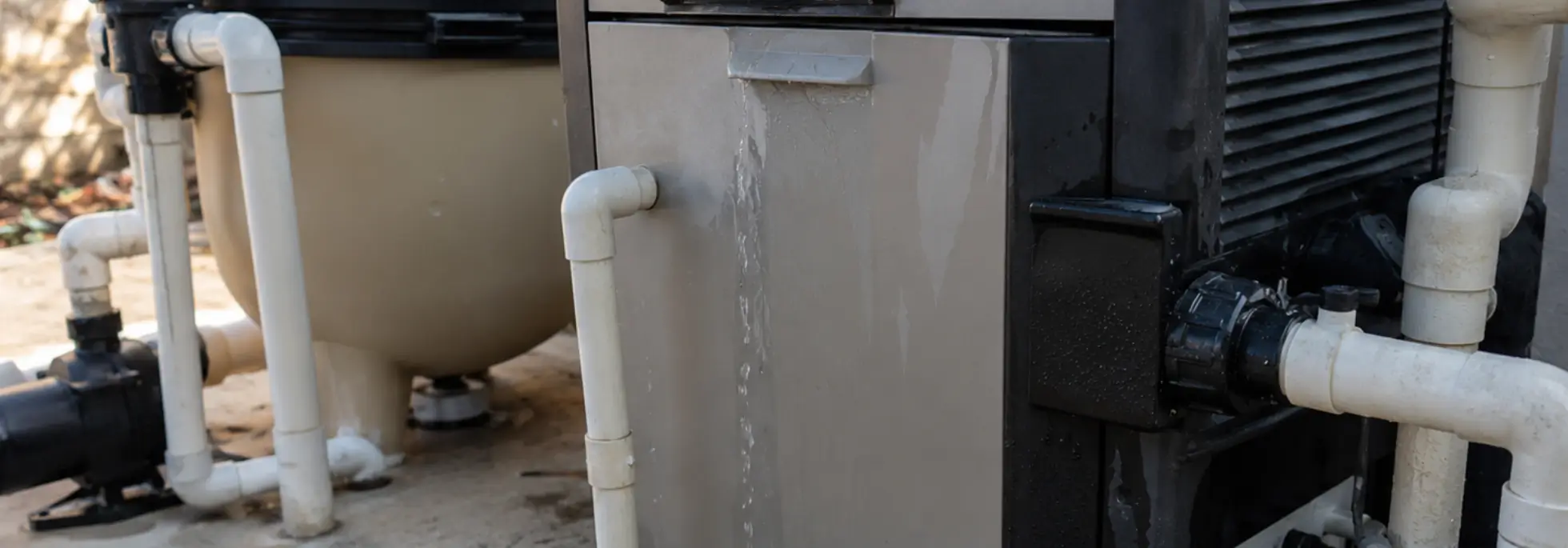
Get Your Quote for Pool Heater Leaking Water
Fill the form below to inquire about Gas Services Edmonton's Pool Heater Leaking Water in Edmonton.
Fill the form below to inquire about Gas Services Edmonton's Pool Heater Leaking Water in Edmonton.
Water shows up under the heater, and the first question is always the same: is this actually a problem? Pool Heater Leaking Water Edmonton walks through how to tell condensation from a real leak before anything gets fixed.
Not every drop of water near a pool heater means something is broken. Gas Services Edmonton gets calls constantly from homeowners across Edmonton who spotted moisture, assumed the worst, and were relieved to learn it was simply normal condensation from a cold morning startup. Others call after weeks of watching a puddle grow, having convinced themselves it would dry up on its own. Knowing which situation applies before booking a service call, or at least knowing what to check first, puts homeowners in a much stronger position either way, and it often changes how urgently the visit actually needs to happen.
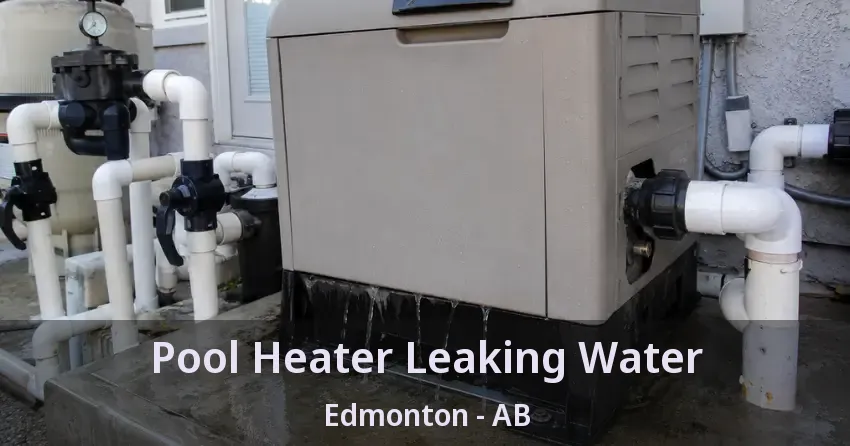
A pool heater with no leak across Edmonton stays completely dry at the base, at every union and fitting, and along the cabinet exterior even after running for an extended period. Water dripping from inside the cabinet is normal only in one specific circumstance: during the first ten to thirty minutes of a cold startup, when normal condensation forms as warm combustion gases meet cooler internal surfaces. That moisture stops once the unit reaches full operating temperature, and it should never continue once the heater has been running steadily for a while.
Anything beyond that window, including water that appears during idle periods, water that continues well past the first thirty minutes, or a puddle that keeps growing between uses, points to actual Pool Heater Leaking Water Edmonton rather than normal condensation. Recognizing that distinction is the first real diagnostic step, and it costs nothing but a few minutes of observation before deciding whether the situation needs professional attention right away or can wait for a scheduled visit.
Condensation is normal only during the first 10 to 30 minutes of a cold startup and stops once the unit reaches full operating temperature. Water that appears during idle periods, continues well past that window, or forms a puddle that keeps growing between uses points to an actual leak rather than condensation.
Leaks trace back to one of four sources nearly every time: the heat exchanger, a plumbing union or fitting, the pressure relief valve, or a gasket and seal. Each source produces a different pattern, which is why drying the area and watching where water first appears helps identify the cause before a technician arrives.
A bucket test compares water loss in a container placed on the pool steps against the drop in the pool itself over 24 hours. If the pool loses noticeably more than the bucket, something beyond normal evaporation is happening, though the source may not necessarily be the heater.
Most leaks are not urgent, but water pooling near electrical connections or the control board is a genuine safety risk requiring immediate attention, including shutting off power at the breaker. A leak that is rapidly worsening or paired with spreading rust should also be inspected promptly rather than left for a routine visit.
Simple gasket, fitting, or minor heat exchanger repairs typically range from $150 to $800. More involved fixes requiring a heat exchanger header replacement can run between $800 and $1,500 depending on the model and part availability. Contact Gas Services Edmonton for a quote based on the diagnosis.
Yes. Low pH and unmanaged chlorine actively corrode a heat exchanger's copper or cupro-nickel tubing, and this damage can begin within weeks of consistently unbalanced water. Testing pH, alkalinity, and calcium hardness two to three times a week significantly reduces this risk.
Dry the entire area around the heater completely, run the system, and watch with a flashlight to identify exactly where water first appears. Noting the timing, checking for rust staining, and photographing the location all help a technician arrive prepared with the right parts.
Pool heater leaking water across Edmonton traces back to one of four sources nearly every time: the heat exchanger, a plumbing union or fitting, the pressure relief valve, or a gasket and seal. Each source produces a slightly different pattern, which is useful information even before a technician arrives, since it helps narrow down what to look for and describe accurately over the phone when booking.
Drying the area completely, running the heater, and watching with a flashlight helps identify exactly where water first appears. This is the single most useful thing a homeowner across Edmonton can do before calling for service, since it turns a vague description into an actual diagnostic clue our technicians can act on right away.
Water travels before it pools across Edmonton, which means the puddle on the equipment pad is often just gravity finishing the job from a leak that started somewhere higher up on the unit. A leak at a header near the top of the heat exchanger can travel down the internal casing before dripping out at the base, making it look like the problem is at the bottom when it originates several inches higher inside the cabinet.
Our technicians serving Edmonton never chase the visible puddle directly for this reason. Tracing water back to its actual point of origin, rather than patching wherever it happens to land, is what separates a repair that holds from one that reappears within weeks. A slightly different puddle pattern often confuses homeowners into thinking the original fix simply failed.
Not every case of a dropping water level points to the heater at all. Pools naturally lose water to evaporation, and a hot, windy stretch across Edmonton can drop the level by a noticeable amount without any equipment issue involved. Comparing water loss with the heater running versus off for a day or two is one of the simplest ways to isolate whether the heater itself is the source.
A bucket test, placing a container filled to pool level on the steps and comparing the drop in the bucket to the drop in the pool over 24 hours, helps separate normal evaporation from an actual leak somewhere in the system. If the pool loses noticeably more than the bucket, the leak may not even be at the heater at all, and could point to plumbing elsewhere or the pool shell itself. Our technicians across Edmonton can help rule the heater in or out as part of a broader inspection when the source is not obvious.
Pool Heater Leaking Water Edmonton even a small amount every day adds up to gallons finding their way into the surrounding pad, subfloor if the equipment is enclosed, and any nearby wiring over the course of a season. Corrosion accelerates once metal surfaces stay consistently damp, which means a leak left untouched for months often develops into a bigger repair than the original source would have required.
Homeowners throughout Edmonton sometimes underestimate how quickly a minor leak compounds, since the heater usually keeps functioning normally for a while even as the underlying damage spreads. By the time heating performance actually drops, the leak has often been active for considerably longer than the visible symptoms suggested, which is exactly why catching it early through routine observation matters more than it might initially seem.
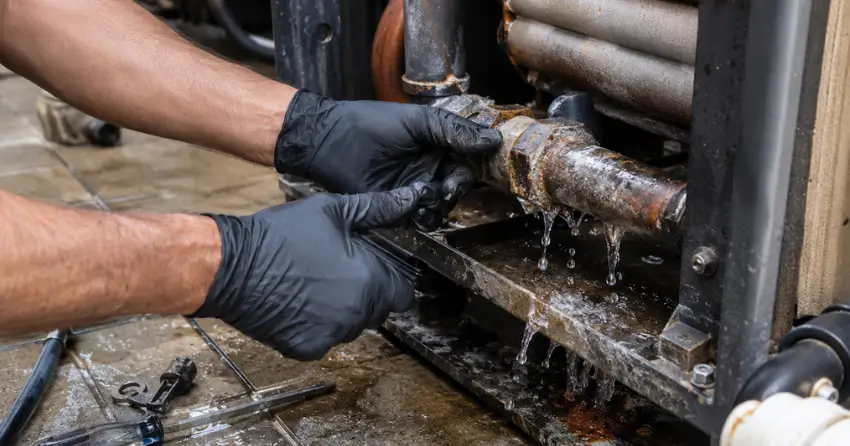
Water pooling near the heater's electrical connections, control board, or wiring across Edmonton is different from a routine plumbing leak and should be treated with more urgency. Standing water near live electrical components creates a genuine shock and fire risk, and the correct first step is shutting off power to the unit at the breaker rather than continuing to run it while investigating further.
Homeowners noticing this combination across Edmonton should avoid touching the unit directly and contact a technician promptly rather than waiting for a routine appointment slot. Most leak situations are not emergencies, but this specific combination of symptoms is the exception worth acting on immediately, even if the leak itself looks minor at first glance, since electrical risk does not scale with how much water is actually visible.
Low pH and unmanaged chlorine actively corrode a heat exchanger's copper or cupro-nickel tubing from the inside across Edmonton, and this kind of damage can begin within weeks of consistently unbalanced water rather than developing slowly over years. A heater that seemed perfectly fine at the start of a swim season can develop a genuine leak by midsummer if water chemistry has drifted without anyone noticing. This risk grows further if a chlorinator or acid feeder sits downstream of the heater and pushes concentrated chemical-rich water back through the connection when the pump shuts off.
Testing pH, alkalinity, and calcium hardness two to three times a week catches drift before it becomes corrosive, and keeping a documented record gives homeowners dealing with Pool Heater Leaking Water Edmonton something concrete to reference if a warranty claim ever comes into question. This single habit prevents more heat exchanger leaks than any other single maintenance step, and it costs nothing beyond a basic test kit and a few minutes each week.
Several heat exchanger models serviced across Edmonton are known for corroded copper nipples on the intake side, which show up as pitting or greenish discoloration on close inspection before an actual leak becomes visible. Catching this early, before the corrosion spreads across the connection, sometimes allows for a soldered repair rather than a full header replacement, which keeps the cost and downtime considerably lower than waiting until the damage has spread further.
Our team keeps the specific gaskets and fittings that fail most often on units in stock for Pool Heater Leaking Water Edmonton calls, which shortens the time between diagnosis and an actual fix. Matching parts to the exact model specification also prevents the kind of uneven stress that causes a repaired connection to develop a new leak within a season, since a poorly matched component can create pressure at exactly the wrong point.
A few minutes of observation before booking a service call for Edmonton can save time and help our technicians arrive prepared. Dry the entire area around the heater completely, then run the system and watch closely with a flashlight to identify exactly where water first appears rather than where it eventually pools on the pad below.
Sharing these details with our team when booking helps us bring the right parts on the first visit rather than needing a follow-up trip once the actual cause is confirmed on-site.
Typical costs for Pool Heater Leaking Water Edmonton repairs in the area range from $150 to $800 for gasket, fitting, and minor heat exchanger repairs. More involved fixes requiring a heat exchanger header replacement or full component swap can run between $800 and $1,500 depending on the model and part availability. Contact us via contact us or call (587) 805-0530 for a quote based on what our technicians find during inspection.
Every quote reflects an actual diagnostic visit rather than a phone estimate, since a puddle that looks identical from one heater to the next can have completely different underlying causes and repair costs. We explain exactly what we find so homeowners across Edmonton understand what they are paying for before any work begins, and there is never pressure to approve a repair on the spot before questions get answered.
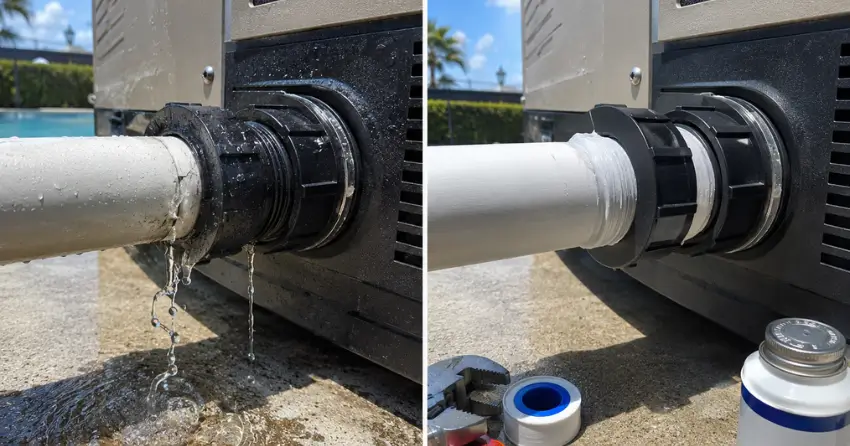
Most gasket, fitting, and union repairs for Pool Heater Leaking Water Edmonton calls are completed in a single visit since our trucks carry the parts that fail most often across the heater models serviced. Heat exchanger header repairs occasionally require a specific part to be sourced, which can add a day or two depending on the manufacturer and how common the model is in the local market and parts network.
Water pooling near electrical components gets prioritized ahead of routine scheduling across Edmonton, since that combination is a genuine safety concern rather than a standard maintenance item. Our technicians confirm realistic timelines during the diagnostic visit itself rather than promising a turnaround before the actual cause is known, since two visually similar leaks can require very different repair timelines.
Gas Services Edmonton is fully licensed and insured, and every leak repair is backed by a workmanship guarantee covering both the parts installed and the diagnostic work behind the fix. With 15 years of experience repairing gas and electric pool heaters throughout Edmonton, our technicians can tell the difference between normal condensation, a minor weep, and a genuine heat exchanger failure before a single part gets touched, which means homeowners are never charged for guesswork.
We walk homeowners through exactly what was found and why, rather than delivering a diagnosis without explanation. That transparency is why households dealing with Pool Heater Leaking Water Edmonton trust Gas Services Edmonton with their pool equipment year after year, and why so many call again for other gas appliance needs once the leak is resolved.
To get your pool heater's leak diagnosed properly, contact us or call (587) 805-0530 and our team will confirm a time that works for your schedule and your pool.
We have seen every way a pool heater can develop a leak. Here are the problems our clients contact us about most often.
Thermal expansion and contraction over multiple seasons can loosen threaded fittings at the inlet and outlet connections until they begin to drip. Left alone, the slow drip works its way into the cabinet and reaches the control board and gas components. We inspect, reseal, and tighten all external connections and test under operating pressure to confirm the repair holds.
A pressure relief valve that drips constantly has either reached the end of its service life or has debris in the seat preventing it from closing fully. Running a heater with a compromised relief valve is a safety concern because the valve can no longer respond correctly to pressure spikes. We test system pressure, replace the failed valve, and confirm the new valve seats properly under real operating conditions.
Internal leaks are often caused by corroded heat exchanger tubing, worn bypass valve seals, or loose internal plumbing connections not visible from the outside. This type of leak tends to cause corrosion damage to surrounding components before it is discovered. We open the cabinet, trace the internal leak source systematically, and replace only the components that have failed.
Brown or green staining on the outside of the heater cabinet usually indicates a slow internal leak that has been seeping through the unit for some time. By the time staining appears on the casing, the leak has typically been running long enough to cause corrosion on nearby components. We trace the internal source, assess the extent of the corrosion damage, and recommend the most cost-effective path to a lasting repair.
Aggressive pool water chemistry gradually dissolves the copper tubing inside the heat exchanger until a pinhole forms and water begins bypassing containment. This type of leak allows pool water and combustion gases to potentially mix, which is both a water quality concern and a safety issue. We perform a pressure test to confirm heat exchanger failure and provide a clear comparison of repair versus replacement costs.
The bypass valve controls water flow around the heater when circulation is needed without heating. The valve stem seal can wear over time and begin to weep water at the valve body. Ignoring a bypass valve leak allows water to reach internal electrical components and causes progressive corrosion. We replace the valve or reseal the stem depending on the condition of the assembly.
If your pool water level drops faster than normal evaporation rates account for and there are no visible exterior leaks, the heater heat exchanger may be allowing water to escape through a breach in the tubing. This is a less obvious presentation of a heat exchanger leak that often goes undiagnosed for a full season. We use a pressure test to isolate the heater as the source and assess the extent of the exchanger damage.
Pool water left in the heat exchanger during winter expands as it freezes and can crack both the tube walls and the header casting. This damage often does not present until the first spring startup, when operating pressure makes the cracks active leaks. We assess the full extent of the freeze damage and determine whether a partial repair or full exchanger replacement is the right solution.
A leak that returns to the same spot after a previous repair usually means the repair was incomplete, the root cause was not fully addressed, or the surrounding material has degraded further since the original work. We run a fresh diagnostic, test the full exchanger under pressure, and determine whether a more comprehensive repair or a full exchanger replacement is the right answer to stop the recurring failure.
I panicked when I saw water under the heater and called right away. The technician explained it was normal startup condensation and showed me exactly what to watch for if it ever became a real leak. Saved me an unnecessary repair.
The puddle was at the bottom of the heater but Gas Services Edmonton traced it back to a header leak near the top of the unit. Would never have found that ourselves. Fixed properly and completely dry since.
Our specific gasket wasn't on the truck so we waited a day for it to arrive. The technician was upfront about it from the start and the actual repair was quick once the part showed up.
We noticed water pooling close to the control board and called immediately. Gas Services Edmonton got someone out same day given the electrical risk and fixed the actual leak source, not just the symptom.
We assumed the heater was leaking based on water loss but Gas Services Edmonton ran a bucket test and showed us it was actually just evaporation from a hot windy week. Saved us from an unnecessary repair call.
We had no idea our pH had drifted low enough to start corroding the heat exchanger. The technician walked us through testing frequency and what to watch for so this doesn't happen again next season.
Contact Gas Services Edmonton today for expert HVAC repair, installation, and maintenance services in Edmonton area.
Call us directly or send a message using the form, whichever works best for you.
CALL US (587) 805-0530 EMAIL US Click to send a messageContact us! Our conversation stays private.

